Once in a while I explain to learners that all yogāsana in Light on Yoga (LoY) are rated from 1-60. For example, tāḍāsana (tāḍa meaning mountain) [Plate 1] has a 1 ranking. Whereas tirieng mukhottānāsana (tirieng meaning oblique, transverse) [Plate 586] has a 60 ranking. However, śavāsana (śava meaning a corpse) [Plate 592] has no ranking. In the description of this last LoYyogāsana B.K.S. Iyengar declares, “This conscious relaxation invigorates and refreshes both body and mind. But it is much harder to keep the mind still than the body still. Therefore, this apparently easy posture is one of the most difficult to master.”
In his instructions for this final yogāsana, B.K.S. first describes, “1. Lie flat on the back full length like a corpse.” Recently I’ve added (after asking all those in the room to take their favorite śavāsana), “You have to be like a corpse to do corpse!” This expression is a corruption (and opposing view) of a statement made by Rock Man, one of the main characters in the film adaptation of The Point!, by Harry Nilsson.
This quaint film first aired when I was 17, and left me with quite an impression. It was the first animated feature ever to air in prime time on US television (ABC’s Movie of the Week). It begins with the father (Dustin Hoffman) telling his son a bedtime story. A fable, wherein the main character, Oblio, is born without a point in Point Village where by law everything in this village must have a point. The round-headed Oblio has had to wear a pointed hat since birth to conceal his ‘pointless’ condition from his pointy-headed peers. However, Oblio is accepted in the town despite his nonconformity, until one day, when the son of an evil count is unwittingly dishonored by Oblio.
The count’s son challenges Oblio to a one-on-one game of Triangle Toss, where competitors catch triangles on their pointy heads. Oblio secures a few wins with Arrow’s help (his dog). In a fit of rage, the count, who wants his son to rule the land one day, confronts the good-hearted but timid king to reaffirm the law of the land, by noting that ‘those who are pointless must be banished from the kingdom.’ A jury reluctantly convicts both Oblio and Arrow, leaving the king with no choice but to banish the pair.
Oblio and Arrow are cast out to the Pointless Forest, but soon discover that even the Pointless Forest has a point. They meet curious creatures who help Oblio see that everyone (and everything) has a point, though it might not be readily displayed. In particular, Rock Man tells Oblio, “You don’t have to have a point to have a point! Dig.”
My objective is to distract those in the room, as I urge them to stop moving, which is the whole point. Only when we stop moving, can we, “6. Relax completely, and breath out slowly.” There is no way around it. If we move, there is a kind of reset to where earlier we are persuaded, “3. To start with, breathe deeply. Later the breathing should be fine and slow, with no jerky movements to disturb the spine or the body.” And then to, “8. Stay in the pose for 15 to 20 minutes.”
If we move, we disturb the natural progression and may not be able to achieve the “energy flow from the back of the head towards the heels.” Where, “9. …one feels completely relaxed and refreshed.” The moral of the story is, be like a corpse, or you will not be able to master this seemingly easy posture.
Here’s everything you need to know about this connective tissue—and how to use the knowledge to deepen your yoga practice.
By Tom Myers
If I asked you what a heart is like, chances are you’d say it’s like a ‘pump’. The lungs are often described as ‘bellows,’ the kidneys a ‘filter,’ the brain ‘a computer.’ We tend to view the body in mechanical terms because we live in an industrial age—and because the body has been described as a ‘soft machine’ ever since the scientist René Descartes coined the term in the early 17th century.
So it comes as no surprise that most anatomy books show you body parts—this muscle, that ligament—as if we’re assembled part by part like a car, or an iPhone. But instead of timing belts and motherboards, we have hamstrings and biceps. An anatomy atlas is a helpful tool for learning, but the error comes when we start thinking that humans are actually built that way. What is actually going on under your skin is so different from what’s in those images.
Why Fascia Matters However, your body is much more like a plant than a machine. We are grown from a tiny seed—a single cell, or fertilized ovum, about the size of a pin prick—not glued together in parts. This seed contains sufficient instructions (given the proper nourishment) to create a helpless, squalling baby, who turns into an energetic toddler, a feckless teenager, and then finally a mature adult.
By the time we’re adults, we consist of approximately 70 trillion cells, all surrounded by a fluid fascial network—a kind of sticky yet greasy fabric that both holds us firmly together, yet constantly and miraculously adjusts to accommodate our every movement.
The traditional biomechanical theory of the musculoskeletal system says that muscles attach to bones via tendons that cross the joints and pull bones toward each other, restricted by other “machine parts” called ligaments. But all these anatomical terms, and the separations they imply, are false. No ligaments exist on their own; instead they blend into the periosteum—vascular connective tissue that serves as cling-wrap around the bones—and the surrounding muscles and fascial sheets. What this means is that you weren’t assembled in different places and glued together—rather, all your parts grew up together within the glue.
For example, the triceps are wedded by fascial fabric to their neighboring muscles north, south, east, and west, as well as to the ligaments deep in both the shoulder and elbow. If you contract the triceps in Plank Pose, all these other structures will have an effect and be affected. Your whole body engages in the action—not just your triceps, pectoral, and abdominal muscles.
The takeaway for yoga? When you do poses, it is useful to put your attention anywhere and everywhere in your body—not just the obviously stretched and singing bits. A release in your foot can help your hip; a change of your hand position can ease your neck.
Understanding the Network of Fascia in the Body The fluid fascial network that lives between each cell in your body consists of bungee cord–like fibers made mostly from collagen, including reticulin, and elastin. These fibers run everywhere—denser in certain areas such as tendons and cartilage, and looser in others like breasts or the pancreas.
The other half of the fascial network is a gel-like web of variable mucopolysaccharides, or mucus. Basically, your cells are glued together with snot, which is everywhere, and is more or less watery (hydrated) depending on where it is in the body and what condition it’s in.
All the circulation in your body has to pass through these fibrous and mucousy webs. Generally speaking, the denser the fibers and the drier the mucous, the less the fascial web allows molecules to flow through it: nourishment in one direction and waste in the other. Yoga helps both stretch and ease the fiber webbing, as well as hydrate the gel, making it more permeable.
New research shows that this web of proteins runs down through the membranes of each cell and connects both aspects of the connective-tissue web through the cytoskeleton to the cell nucleus. This means that when you’re doing yoga stretches, you are actually pulling on your cells’ DNA and changing how it expresses itself. Thus, the mechanical environment around your cells can alter the way your genes function.
We’ve known for a while that the chemical environment (hormones, diet, stress catecholamines, and more) can do this, but these new connections explain some of the deeper changes we see when people start practicing regularly.
More on that mechanical environment: Cells are never more than four deep from your capillaries, which excrete food, oxygen, messenger molecules (neuropeptides like endorphins), and more. Tension in your body—slumping your shoulders forward, for example—prompts the fibroblasts (the most common cells found in connective tissue) to make more fibers that will arrange themselves along the line of stress. These bulked-up fascial fibers will form a barrier that will slow or stop capillary-sourced food from reaching your cells. You’ll get enough to survive, but function will slow down. In addition to a thicker barrier of fascial-tissue fibers, the mucus that completes your fluid fascial network will also become thicker and more turgid, which contributes to stopping the flow to your cells.
And because the exchange of goods from capillaries to cells is a two-way street, with cells delivering messenger molecules and CO2 and other waste products back into the bloodstream, a hardened fascial network can trap unprocessed cell products (toxins or metabolites) like a stream eddy traps leaves.
The fix: deep strengthening and stretching squeezes your fascial network the way you would squeeze a sponge. Those metabolites that were trapped in the mucousy bits rush in hoards to the capillaries and your bloodstream. Many of us may feel out of sorts after we release deeply held tension—that’s your liver dealing with the metabolites you squeezed from the tissues. Try an Epsom salts bath, or go back for more movement to keep the process going.
Over yoga time, fascial fibers will slowly thin out and unadhere over weeks, sometimes months, but the mucus can change to a more liquid state in as quickly as a minute, allowing more sliding, less pain, more feeling, and less resistance. Use your yoga—it’s a great tool to get fluids and information flowing to their maximum sensitivity and adaptability.
Body of Knowledge: Fascia 101 Fascia is the biological fabric that holds us together—the connective-tissue network. This collagenous network of gel and fiber is made up in part by an “extra-cellular matrix,” manufactured inside a connective-tissue cell and then extruded out into intercellular space. The fiber-gel matrix remains an immediate part of the environment of every cell, similar to how cellulose helps provide structure to plant cells. (Remember, we are more like a plant than a machine.)
The Anatomy Trains body map shows our myofascial, or muscle-fascia, anatomy. These 12 whole-body myofascial meridians are more evident in dissection. While most anatomy textbooks show the muscles with the filmy fascia removed, this map illustrates fascia’s deeper function—as global lines of tension, proprioception, and interoception that embed the body’s neuromuscular network, acting to keep your skeleton in shape, guide movement, and coordinate postural patterns. Understanding how these lines function can help unlock a deeper understanding of anatomy for your yoga practice. For example, in Urdhva Mukha Śvanāsana (Upward-Facing Dog Pose), you are stretching the entire superficial front lines of fascia—the green lines—from the tops of your feet all the way up to the sides of your neck to the back of your skull. You are also challenging all four arm lines. When you strike the right balance in this pose, you can feel your fascial web helping you realize tension and stability, effort and ease.
Rick Cummings
Feel Your Fascia The benefits of thinking of the body as a whole organism, instead of in parts, are profound. When we truly comprehend and feel this in our own bodies and see it in our students, we can move and teach with more integrity. That said, as yoga becomes physiotherapized, or made into a practice resembling physical therapy that helps people restore movement and function (a necessary and positive process in general), asana are often reduced to which muscles are stretched—think “Downward Dog is good for your hamstrings.” In reality, while tight hamstrings may be a common experience, your edge in this pose may be deep in your calves or butt, or along the fronts of your shoulders. It depends on your patterns—the way you were grown and what you took on.
Try this exercise to help you feel that your anatomy is more like a plant than a machine, and to help you move away from separating yourself into parts:
Practice: Feel Your Fascia in Downward-Facing Dog Move into Down Dog. It is easy to feel your back body in this pose as you lift your hips, drop your heels from the middle of your legs, and lengthen your spine. But take time to spread your awareness and attention throughout your entire body in order to find points that lack awareness and are unique to your experience of this pose. Here are some points to ponder:
Track the front of your spine in this pose, as if you were rolling a warm red ball up the front of your spine from your tailbone, up the front of your sacrum and the lumbar and thoracic vertebrae, then behind your guts and heart.
Relax your voice box, then your tongue, then your jaw. Let your head dangle. Let yourself be stupid for a moment, then re-establish the length in your cervical spine without the tension.
Move your breath into the back of your ribs, which can be frozen in your early work in this pose. Can you feel the ribs moving under your shoulder blades? Are you moving your lower ribs behind your kidneys?
Move your weight around your feet while in the pose. This can be subtle but powerful. If your heels are off the ground, move slowly, medially then laterally, on the balls of your feet. Feel how that changes the way you feel the rest of your body. If your heels are down, move slowly all around your feet like a clock: At what position do you lock up? Work there.
Because the deep lateral rotators are often limiting in this pose, can you let the area between your sits bones bloom? Try rotating your knees inward in the pose to help find your limitation, and keep working your hips upward. Remember, you are whole. Someone may describe you as a machine, but that is not the scientific truth—wholeness is.
Writer Tom Myers is the author of Anatomy Trains and the co-author of Fascial Release for Structural Balance. He has also produced more than 35 DVDs and numerous webinars on visual assessment, Fascial Release Technique, and the applications of fascial research. Myers, an integrative manual therapist with 40 years of experience, is a member of the International Association of Structural Integrators and the Health Advisory Board for Equinox. Learn more at anatomytrains.com.
The sun streams in through the beveled glass window, creating bright patterns across Oriental and hardwood floors. Surrounded by exquisite Japanese vases, prints an scrolls, I wait for Mary Dunn, teacher and co-owner of the B.K.S. Iyengar [method of] Yoga Center in San Diego, to bring me tea. As she walks into the room, her warmth and liveliness fill the silence. At 40, she looks like a woman who is living to her potential. Her thick brown hair is cut short, and her skin is brown from the sun. Her strong and compact body is graceful, and the flexibility she has achieved in ten yers of yoga practice is evident in her every movement.
Mary was introduced to yoga by her mother, Mary Palmer, who lives and teaches in Ann Arbor, MI, and who studied extensively with B.K.S. Iyengar in India and England. It was Mary Palmer who helped convince Iyengar to come to the United States for the first time [*] in 1973. In 1974, when he was planning to return to the U.S., Rama Jyoti Vernon asked Mary Palmer to see if he would extend his visit to the West Coast.
Mary Dunn was then a beginning student of Rama’s, and living in Berkeley with her husband, Roger, and their two daughters, Louise, now 13, and Elizabeth, now 9. She attended Iyengar’s classes as a complete beginner. In fact, he used her as a model to demonstrate how to teach his method of yoga. “I knew my life would never be the same again after that first marathon class with him.”
Mary drew on the love of movement that had made her an accomplished figure skater and swimmer while growing up in Ann Arbor. She was eager to free her joints and muscles as Iyengar had shown her, and practiced diligently on her own, in class, and directly with Iyengar in the U.S. and India. She began teaching by substituting for Rama, and went on to teach at the Institute for Yoga Teacher Education in San Francisco (now the Iyengar [method of] Yoga Institute).
After 11 years in the Bay Area, Mary and her family relocated to San Diego, where they have lived ever since. Their home is decorated with Roger’s art collection and Mary’s family heirlooms, including and ebony grand piano. Mary, well-trained in music, now works daily with daughter Elizabeth, a talented pianist who attends the School for Creative and Performing Arts in San Diego.
The day begins early for the Dunns. Everyone rises at 5:30 a.m., breakfasts are eaten, lunches prepared, school books gathered, and all are on their way by 7:00. After Mary drops Elizabeth at the school bus, she continues to the B.K.S. Yoga Center, which she has shared with two women of the past three years. It is there, in a studio filled with props of all kinds, that Mary does the majority of her teaching. She also travels as a frequent guest of yoga centers around the U.S. and Canada.
As we begin our talk, Elizabeth comes in from school. Mary greets her, and together they plan the afternoon’s piano practice. As Elizabeth rushes up the stairs, Mary turns her attention to my questions.
JS: Mary, your classes seem inspired. Where does this inspiration come from? MD: It comes from all aspects of my life. For example, while I was teaching trikoṇāsana, I looked out over the beginning class and they reminded me of my children when they were learning to dive off the side of a pool. When children dive, they don’t extend. They just stand on the side of the pool and fall in, head first.
There’s no sense of timelessness, of time stopping, which is what you want to see in a dive. I took that premise as a starting point for the class. I related how trikoṇāsana must not be like a belly flop where you’re just falling into the “pool”. You have to feel it as a swan dive. You go into the pose, extending indefinitely. In yoga we have an advantage because we can keep extending. We don’t have gravity forcing us to finish a pose. We can keep diving forever. All the standing poses are related to this feeling of always lifting, of expressing timelessness.
JS: Mr. Iyengar talks about the concept of time in the physical body. How does that fit with this idea of timelessness? MD: Mr. Iyengar uses the front of the body to talk about the future, and the back to talk about the past and the need to always balance these. This balance gives a sense of timelessness. The physical experience of being in the present. When the awareness is complete and the mind still, the sense is one of meditation.
Meditation is being present, the ever-continuing present. Mr. Iyengar’s genius is taking psychological states and translating them into the physical arena where we can understand them. We might not know how to extend our consciousness yet, but we can learn to extend a finger and can learn from the physical analogy to start extending our consciousness. That’s why when you see his poses you can feel the expansions of his presence, and this is one of the things that makes his teaching so revolutionary.
The known and unknown body is another way he talks about the front and back body. The front is where our sense organs are located. As we look at ourselves in a mirror or at one another we hardly ever see what’s going on in the back body. We get to know our front and we don’t get to know our back, so the back is the physical analogy for the unknown body.
JS: As the knowledge moves into the back body, it seems we are depending less on our senses. Are we becoming more inward as we learn about the unknown? MD: The concept of Pratyāhāra (withdrawal of the senses) does not mean that you don’t appreciate what is out in the world, but that you are not overwhelmed by that knowledge which comes through our senses. With yoga, you have some ability to get to know the world of the spirit, the inner self. That is the point of what we’re doing. All the different kinds of poses give us that knowledge in a different way.
That’s why it’s important to balance, not only do backbends without doing forward bends, or only sitting poses without doing standing ones, or all vigorous poses and no static ones. It’s important to have the whole balanced, because self-knowledge is different in active poses than in passive ones.
JS: Do you feel the process of yoga takes place only while practicing āsana? MD: I have had an interesting experience a number of times with a posture I have been working on and am unable to do. I will dream about it and it has been so vivid that I have awakened with memories of the dream, and will be able to get out of bed and do the pose. I know that the process goes on all the time, and the solutions appear, not by trying so hard, but by allowing the experience to develop within the whole person, not just the intellectual function or the physical side, but the whole person.
The pose is the outward manifestation of the integration that has taken place. This is how Mr. Iyengar’s method works. It accounts for many different planes of reality. It is not as if someone has thought up and superimposed a system upon human’s mind, body, and spirit. Instead, it is a revelation of what’s already there.
JS: You believe there is a basic truth in the way the body should move, and as we learn how the hips should roll or the shoulders should open, for example, we have a deeper discovery and awareness. MD: Yes , that’s accurate.
JS: Is it possible to become misguided in those movements, and is that how injuries occur? MD: Definitely. You are misguided when you’re not listening sensitively to what’s going on in your body. For example, if a person works aggressively Hanumanāsana [**], the vulnerable hamstring muscles can be easily torn. Thus, the person must be willing to go quite slowly to allow the body to open without injury.
JS: The danger seems to come when the goal is more important than the process. MD: Yes. That gets to the essence of it. If you are striving for a goal, you are in the future, and the goal is more important than what is going on in the present. It becomes a striving attitude.
JS: Obviously then, one of the teacher’s roles is to keep students from injuring themselves. What else do you feel a teacher does? MD: A good teacher inspires by actually giving his or her own energy to the students so they have a sense of their own possibilities. What I teach comes from my own practice and from what I observe. I notice when the teaching is coming well, it flows so beautifully that I feel I am almost transported. I am absolutely beyond myself and in clear touch with what I’m seeing from my students. There is an accumulation of knowledge that I draw on, and I say things that I have not prepared in advance at all.
In contrast, as a more immature teacher I thought of myself, how the class was responding to me, how my demonstrations looked. Now I can get, beyond myself, and to the students more easily. I often feel Mr. Iyengar is right there in the room with me.
JS: Your class design is not from a set curriculum then, but from the needs of the students in the class? MD: I absolutely believe that you select what you teach according to your students. If I don’t adjust the poses to fit the needs of the students, then I’m missing part of my calling. Yoga is not just the intricacy and stability we teach in standing poses. It is the fun and freedom of jumping, it is the serenity of inverted poses, it is the excitement of backbends and the softness and surrender of forward bends, the operation of twists. A teacher must bring all these things to the students at the appropriate time.
JS: And the richness of yoga is also expressed in this variety . . . MD: It’s the most fantastically rich subject. This is what drew me so strongly to Mr. Iyengar during those first classes. I had the experience of being in the presence of a master and transcending myself in a way I had never done before. It was an unbelievable event for me and I haven’t been the same since. It set me on a path in which I continue to find more all the time. Often people ask me if I have ever tried t’ai-chi ch’üan or other arts of self-development, and my answer is no. Not because I have any feelings that they are not also worthy arts, but I’m engaged in an art which is so wonderful to me., and I haven’t, in any way, completely explored it yet. I am going to, and am now following this path of yoga as far as I can go, as far as it will take me.
JS: How do you feel yoga has helped you in other aspects of your life? MD: In yoga we try never to lose sight of what we’re doing. Sometimes in working in a pose we think what we’re doing is able to touch our head to our feet, for example, but that’s not really what we’re doing it for at all. We are practicing those philosophical truths that we think are important as yoga students, those truths that we read about in the Sūtras. Then joining starts to happen and this spills over into the rest of our lives.
JS: What about people who have excelled at a physically demanding sport such as gymnastics? They have reached a beautiful control in their movements. Are they, although unaware of the yogic philosophy, actually realizing some of the spiritual growth that accompanies the practice of yoga? MD: I think so, because I feel when you pursue any art to its highest form it becomes internal. On the other hand, it is also possible to become skillful at the āsanas without having yoga touch their soul. Caught up in the outer drama of the pose, hence caught up in the ego. We first view the world through a prism of the ego. When we give up the ego, we experience the inner drama. We see people and situations for what they are, not what we think they are or want them to be. The path of giving up the ego uncovers the spirit.
JS: Do you think that then ego can hold us back from doing the poses? MD: Yes, absolutely. I have a student who says, “I can’t do that” each time I ask her to do an arm balance. Her ego, or perception of herself, is telling her that she is not an able person. So I am always telling her she can do it, pushing her to reach her potential to discover that capable part of herself that is hidden by the ego. It’s my job as a teacher to keep saying, “Yes, you can.”
JS: Mary, you give so much to us as student , are there any times when your family feels left out? MD: Well, of course my mother [***] is fantastically pleased that I’m so involved in yoga. And my father is very supportive of us both. Every time I have gone to India he has come to help my husband run the household and take care of our two daughters. One major reason I have been able to pursue yoga so wholeheartedly is that my husband, Roger, has been very supportive from the outset. It’s meant a lot of schedule juggling, a lot of flexibility. Louise and Elizabeth accept my involvement with good humor. In fact one of them came up with the nickname “Swami Mommy,” which stuck.
JS: How long do you think a student should continue studying with a teacher? MD: As long as the student feels he or she is learning a great deal from the teacher, they should continue. Once again, that work does not replace what the student learns on his own.
JS: Just one more question, Mary. Is the idealized pose the correctly aligned pose? MD: Yes, if you take the phrase “correctly aligned” in a philosophical sense. When this complete alignment takes place, the wavering is gone on all levels. It’s as if a vibrating string on a stringed instrument has come to a place of stillness. You sense that potential for sound, but the string has become absolutely aligned so the waverings are no longe there. That’s the perfect pose.
It doesn’t do me much good to talk with the beginner about the philosophical ramifications of the yoga practice if she or he doesn’t know that in Utthita trikoṇāsana the front foot turns in 30°, the other out 90°, and align the kneecap directly with the toes, and so forth.
Those are the physical laws of the movement. If I don’t teach those first, and instead rely on high-sounding ideas, I may have people doing postures that are physically harmful. Those unaligned poses certainly aren’t opening up pathways of the nervous system the way a correct pose would, or inducing a sense of quietness in the mind.
Great disservice is done to beginners, if care is not taken installing the basics of the pose. Once beginners have the idea of alignment, even if they’re not limber or don’t have familiarity with many different poses, disservice is done when the vastness of the subject and the implications of what they’re doing is not addressed.
Jenny Snick has worked, and studied, with Mary Dunn for the past three years in their studio, the B.K.S. Iyengar [method of] Yoga Center in San Diego.
* At the invitation of Standard Oil heiress Rebekah Harkness, he came to the United States in 1956. American interest in yoga was growing—indeed, Indian gurus were already active there—but Iyengar was repelled by the country’s materialism. “I saw Americans were interested in the three W’s—wealth, women, and wine,” he told O’Connor. “I was taken aback to see how the way of life here conflicted with my own country. I thought twice about coming back.” Iyengar lived for a time in Switzerland and did not return to the United States until the early 1970s.
** “The goal is not to hold at any cost an āsana that is painful, or to try to achieve it prematurely. This is how I hurt myself as a young practitioner when my teacher demanded that I do the Hanuman āsana, which involves an extreme leg stretch, without proper training or preparation.”
Read more: B.K.S. Iyengar, Light on Life, 2005 Royale, p. 50
*** Then in 1969, some fifteen years after Menuhin had first invited Iyengar to London, Menuhin gave a concert in Ann Arbor, Michigan, the home of Mary Palmer. Before her own first teacher in yoga had left Michigan, she had recommended ‘Light On Yoga’ to Palmer, saying “You have the finest book on the subject. Use it”. Her husband, a Professor of Economics in the University of Michigan, was due to take a sabbatical in India. Noting Palmer’s interest in yoga, Menuhin said to her “you must meet my yoga teacher in India. His name is BKS Iyengar”. Inspired both by Menuhin and this coincidence, she determined to meet Iyengar. Once she had reached New Delhi, she wrote to Iyengar and was able to go to Pune and study with him for three weeks. She also travelled to London to study with him at his ILEA classes.
 The count’s son challenges Oblio to a one-on-one game of Triangle Toss, where competitors catch triangles on their pointy heads. Oblio secures a few wins with Arrow’s help (his dog). In a fit of rage, the count, who wants his son to rule the land one day, confronts the good-hearted but timid king to reaffirm the law of the land, by noting that ‘those who are pointless must be banished from the kingdom.’ A jury reluctantly convicts both Oblio and Arrow, leaving the king with no choice but to banish the pair.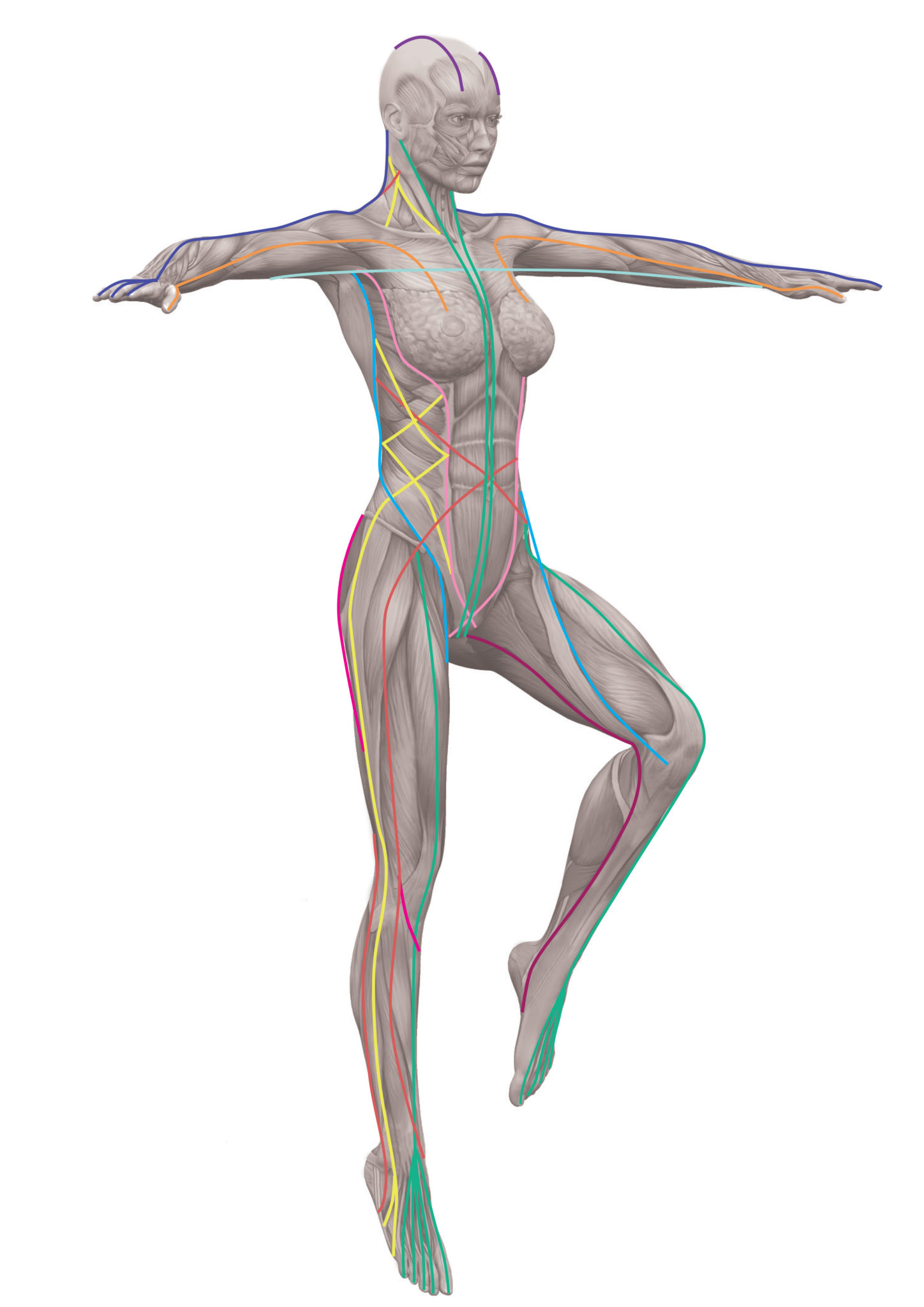

 Rafael Durán