Low Back Pain

Part 2**

Low bak pain can be many kinds and cause, from simple fatigue to more serious causes which need medical attention. Whenever low back pain persists, or one experiences persistent referred pain in other areas of the lower body (it is of course hard to know whether pain is referred — except that one cannot pinpoint the cause of the pain), it is well worth having it checked out by a medical professional.

  1. Nerve Root Compression: This refers to the half-inch of a nerve as it exits the spine. The ‘sleeve’ that protects the nerve is sensitive to pain, and compression on the nerve — and this ‘dural sleeve’ compression is caused by a herniated or protruding intervertebral disc that is pinching it. This can cause ‘referred pain’ to the buttock, thigh, lower leg, or foot.
  2. Spinal Stenosis: A narrowing of the spinal canal through which the spinal cord runs, or a narrowing of the openings through which the nerves branch out from the spine. Usually found in the elderly, and develops slowly over a long period of time. The narrowing of the space puts pressure on the nerves, and the symptoms are a gradually increasing numbness, weakness, and pain in the low back and legs.
  3. Bone Spurs — Osteophytic Root Pain: A type of nerve root pain caused by compression on the nerve from the growth of a bone spur. Often there is no pain, but only decreasing sensation in the leg, or weakness in the leg or foot.
  4. Spondylolistheses: A congenital condition in which two adjoining vertebra are misaligned (listless means ‘to slip’). A vertebra may be one quarter to one half inch out of alignment, whether anteriorly or posteriorly. The stress from this misalignment can make one or more vulnerable to injuries. Thi scondition occurs most frequently in the low back.
  5. Cancer at the Spine: Cancer in various parts of the body can sometimes spread to the spine. The most common symptoms of this is pain, which may be localized in the spine, may be more generalized, or may resemble the kind of referred pain to the buttock, thigh, lower leg, or foot, that is typical of nerve root compression. The pain caused by cancer tends to be constant, worse at night, and not relieved by rest. It gets worse with strenuous activity. Nerve compression from cancer can cause weakness in the legs and feet, difficulty walking, and urinary problems leading to incontinence. Spinal fractures due to rumor growth are also quite possible.

** Any symptoms resulting from the above should be explored by medical professionals for proper diagnosis and treatment.

Apple Cider Vinegar?

Experts Explain the Science-backed Benefits
by Stephanie Watson / Dec 31, 2023 / 5:00 AM*

Apple cider vinegar does have certain healthful properties,
which are largely due to its acetic acid content.
Apple cider vinegar has long been a pantry staple, thanks to its versatility as an ingredient in everything from salad dressings to sauces and stews. More recently, this vinegar made from fermented apple juice has also gained a reputation for its medicinal properties. The tart-tasting liquid has been promoted for accelerating weight loss, lowering blood sugar and cholesterol levels, and boosting energy. Which of the claims are backed up by science? Fortune asked two nutritional experts to dig into the evidence surrounding apple cider vinegar’s potential benefits.

The health benefits of apple cider vinegar
Apple cider vinegar does have certain healthful properties, which are largely due to its acetic acid content. “Acetic acid is a really important metabolite in our bodies, and the only dietary source of acetic acid is vinegar,” Carol Johnston, Ph.D., professor of nutrition and associate dean in the College of Health Solutions at Arizona State University, tells Fortune. But as a cure-all, apple cider vinegar doesn’t hold up to scientific scrutiny. “We don’t have evidence to back up a lot of the claims,” says Johnston. She should know, since she’s been studying vinegar—and not just the apple cider variety—for decades.

Apple cider vinegar and blood sugar
The most “robust” evidence is for apple cider vinegar’s effects on blood sugar, Johnston says. In a 2021 review of nine studies published in BMC Complementary Medicine and Therapies, apple cider vinegar lowered fasting blood sugar and HbA1c (an average of blood sugar levels over three months) in people with type 2 diabetes. It also brought down their total cholesterol.

How might apple cider vinegar lower blood sugar? Three mechanisms are likely involved, says Johnston:
• One is by slowing stomach emptying after a meal, which delays the movement of glucose (sugar) into the bloodstream
• The second is by blocking the breakdown of starch into glucose.
• And the third is by increasing the amount of glucose muscle cells take in.

“The result is you have less glucose in your blood,” Johnston says.

Apple cider vinegar and weight loss
Some studies have suggested that apple cider vinegar can boost weight loss by increasing feelings of fullness after a meal. But any weight loss it might bring about is minimal—a pound or two per month.

“If you are already implementing diet and lifestyle changes, apple cider vinegar may be able to give you a slight advantage by helping you control your hunger while you eat less food. The scientific evidence falls short of indicating that apple cider vinegar is a magic bullet to produce weight loss on its own,” Kristine Dilley, a registered dietitian at The Ohio State University Wexner Medical Center, tells Fortune.

Apple cider vinegar’s potential benefit
Other potential applications are intriguing, but the research is still preliminary. For instance, vinegar might have a future role in treating depression because of its effects on brain metabolism. It’s also a good source of polyphenols, plant-based antioxidants with anti-inflammatory properties.

Johnston sees the potential. “I think there’s going to be a lot more that we’re going to learn from vinegar in the future,” she says. She also notes that vinegar doesn’t need to be of the apple cider variety. Any vinegar with a concentration of at least 5% acetic acid should offer the same benefits—including red wine and balsamic vinegar.

How much apple cider vinegar should you take?
Our experts recommend taking 1 to 2 tablespoons of apple cider vinegar daily—and no more than 4 tablespoons in total. “The easiest and safest way to consume apple cider vinegar is to work it into your daily diet by adding it to foods you already consume,” Dilley suggests. Apple cider vinegar makes a good addition to salad dressings, marinades for chicken or fish, pickled vegetables, soups, and stews.

If you want to take it on its own, Dilley recommends diluting it with 8 to 12 ounces of water. Apple cider vinegar is highly acidic. Drinking it straight as a “shot” could irritate the lining of your mouth or damage your tooth enamel. Dilley doesn’t recommend using apple cider vinegar capsules or gummies, which aren’t regulated by the FDA. These supplements may not contain the amount of vinegar listed on the label.

Check with your doctor before you take apple cider vinegar, because it can interact with certain medications—especially drugs that lower blood sugar or potassium, Dilley says. Cooking with it shouldn’t pose a problem with your medications.

Who shouldn’t use apple cider vinegar?
Avoid apple cider vinegar if you have gastroesophageal reflux disease (GERD) because it can irritate sores in the lining of your esophagus, advises Johnston.

Vinegar also isn’t recommended for people with slow stomach emptying called gastroparesis. Because vinegar also slows stomach emptying, it could make the condition worse.

The bottom line on apple cider vinegar
For now, the best-researched health benefit of apple cider vinegar is for lowering blood sugar. Still, Johnston considers vinegar a worthwhile addition to the medicine chest. After all, it’s been part of medicine since Hippocrates used it for treating wounds. “Anything that has been in the medicinal world for 2,000 years has to have some legitimacy,” she says.

* Posting in Apple News, from Fortune Magazine
**There is evidence that 2 Tblsp of diluted acetic acid lowers inflammation. But it must be well diluted, or it could cause other problems.

A Scientific Approach to Our Yoga Practice

by Nina Mel, Elephant Journal, March 28, 2013

Exploring the connection between our intention & our yoga practice. For a long time scientists believed that 98% of our DNA ‘text’ is not used in the coding of proteins and enzymes. Since it is not responsible for constructing our basic physical form, its purpose remained unknown for 15 years, and scientists called it ‘Junk DNA.’ But recent breakthrough revealed that this ‘junk’ is in fact crucial to the way our genome works.

This great result was achieved by researchers from the International project ENCODE (Encyclopedia of DNA Elements). 442 scientists, situated in 32 institutes around the world, including Britain, USA, Spain, Singapore, and Japan, began to work on this project in 2003. They used 300 years of computer time and five years in the lab to get their results.

Their main purpose was to deeply study the human genome, and they now declare that DNA is more active and multifunctional than was previously believed. As one of the participants of ENCODE, Bernie Evan from Cambridge says: “…the term ‘junk DNA’ can now be sent to the trash.”

But even in late 1990s, a team of Russian linguists led by Dr. Peter Gariaev discovered that the genetic code in ‘junk’ DNA follows uniform grammar and usage rules virtually identical to those of human language. It turns out that the ‘junk’ was laden with the intimations of intelligence, purpose, and meaning.

One of the basic assumptions made by Dr. Gariaev’s team is that “the genome has a capacity for quasi-consciousness so that DNA ‘words’ produce and help in recognition of semantically meaningful phrases.” Because the structures of DNA base pairs and that of language are so similar, we can alter our own genetics by simply using words and sentences, as has been experimentally proven.

This finally explains why affirmations, hypnosis, conscious commands, and intention have such strong effects on humans, their bodies, and minds. Another scientist, cell biologist Dr. Glenn Rein, discovered experimentally that people with coherent electrocardiograms could wind or unwind DNA samples at will, while those with incoherent heart energy could not. In these experiments, simply feeling positive, love-based emotions was not enough to affect the DNA samples: “the intent to alter them had to be present.”

“Love-based emotions stimulate DNA to decompress so that messenger RNA can access codes for healing. Joy, gratitude and love accompanied with intention unwind or decompress DNA exposed to them.” Negative emotional states—anger, fear and similar emotions have the power to contract DNA molecules, compressing the DNA helix, “severely limiting access to genetic information necessary for healing, as well as evolution.”

The effects of focused intention have nonetheless been studied using both physical (Jahn and Dunne, 1986) and biological systems (Braud, 1989). A parallel investigation of conscious intention on biological systems falls under the auspices of healing research where investigators have demonstrated that various types of healers who use intention can produce biological effect (Benor, 1990).

The experiments conducted by Rein in 1992 were intended to study and compare the biological effects of different images, thoughts and intentions. The healer, Leonard Laskow, M.D., attained different states of consciousness working with intention. These various experiments showed that under the same experimental conditions some intentions were more biologically active than others.

These results indicate that focused human intention can influence the DNA synthesis. It was also demonstrated that intention was a critical component of the states of consciousness which produced biological effects.

There are different ways we can consciously use the benefits of working with intention in our everyday lives. One of them is yogāsana practice. Encoding the DNA with intention has been used by yogis of ancient times in order to achieve higher states of consciousness, but this skill had been lost for centuries. When yoga was brought to the West, many versions lacked intention, therefore it changed a spiritual practice capable of truly transforming the mind and consciousness into a fitness-like physical practice without ‘spiritual core.’

As western medicine has divided the human body into separate parts, and as science has divided knowledge into physics, mathematics, philosophy, psychology, astronomy, and so forth, the yogic knowledge has also been divided into āsanas, prāṇāyāma, dhyāna, ayurveda, vastu… So Yoga became fragmented and could not reflect its very own nature, which is to connect. The link that connects this seemingly multi-faceted practice is intention, which will allow penetration into each of the fragmented parts and ‘connect’ them to the one.

N-Code Yoga, shows how to use intention in yogāsana practice and how to align it with āsana, śvasāyāma, and related movement in order to change DNA patterns, consciously releasing energy blockages, speed-up spiritual, physical, and psychological development, thereby distinguishing it from the conventional [modern] ways of practicing yoga.
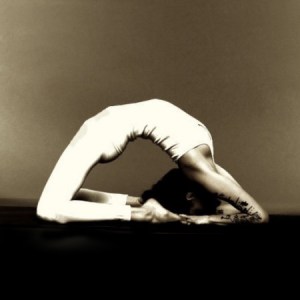
Using intention, especially when it is manifested in words and visualization during yoga practice, chakra get easily activated, energy meridians get cleansed, healing and detoxication processes are enhanced. Thus, intention deeply affects yoga practice and the practitioner on all levels: physical, mental and spiritual. A yoga practitioner can use intention to move her/his body, and mind, from one āsana to another, can breathe intention in and out, encoding it into every cell, so that this intention can be transmitted into the Universe, which begins to manifest itself in everyday life.

Practice for the sake of practice has no value, this can even be unsafe and dangerous because the new energy generated in the body during the practice without conscious direction can not be used in constructive ways. Since the undirected energy leaks out with daily emotional ups and downs, it is wasted and the practitioner’s energy level returns to its previous level or even less.

When energy is not directed consciously, it goes to its usual ‘neuro-pattern,’ strengthening the weak ‘points’ and negative patterns of the mind that have already been formed during past times. That is why the energy that is built during unconscious practice, a practice without intention becomes destructive.

Therefore intention encodes and dedicates one’s practice to a higher purpose, thus becoming a higher spiritual practice—a prayer, a gratitude, a vector of attention—all at the same time. Intention becomes a linking part of all aspects of yogayama, niyama, āsana, prāṇāyāma, pratyāhāra, dhāraṇā, and dhyāna. Intention reprograms the old ways of functioning, decompressing DNA, and awakening its dormant 98%, bringing the possibility of revealing and manifesting the full human potential ever closer [which makes the impossible, possible; the possible, attainable; and the attainable, graceful].
IYENGAR YOGA RESOURCES TO SUPPORT YOUR HOME PRACTICE

by Richard Jonas

Home Practice: Starting Now
Home Practice is the core of yogāsana. Class is great – but there is more, much more to it. Practicing on your own is too important to miss out. When beginning a practice at home, one really learns, really experiences the transformative effects of each āsana – on body, mind, and spirit.

How can one get a Home Practice? Get up tomorrow – practice – then do it every day after that (take Sundays off). If that sounds daunting, here are some hints that might help one get started and stay with it.

Start slow:
Students tend to set the bar too high when starting a Home Practice. If it doesn’t resemble an hour of perfectly sequenced poses, they are disappointed and give up. Instead, do a few poses that are familiar and feel confident with. When finished, lie down for a five to eight minute Śavāsana. Fifteen minutes later, you have a Home Practice!

Be disciplined:
Make Home Practice a priority. Do it every day. Keep with it for two weeks, then note how better you feel, physically and mentally. It gets easier. Soon your 15-minute Home Practice will grow to a 30-minute one. Give this practice a dedicated time and space, and it will make room for itself in one’s life.

Time and Place:
Choose a time of day, and a place where there is a low probability of being disturbed. Ideally, keep that same time each day. First thing in the morning works well; waiting until later might interfere with your schedule. The body may be stiff in the morning, but the mind is quiet and receptive – something very important. If afternoons, or evenings, work better, then practice then.

Do what you know:
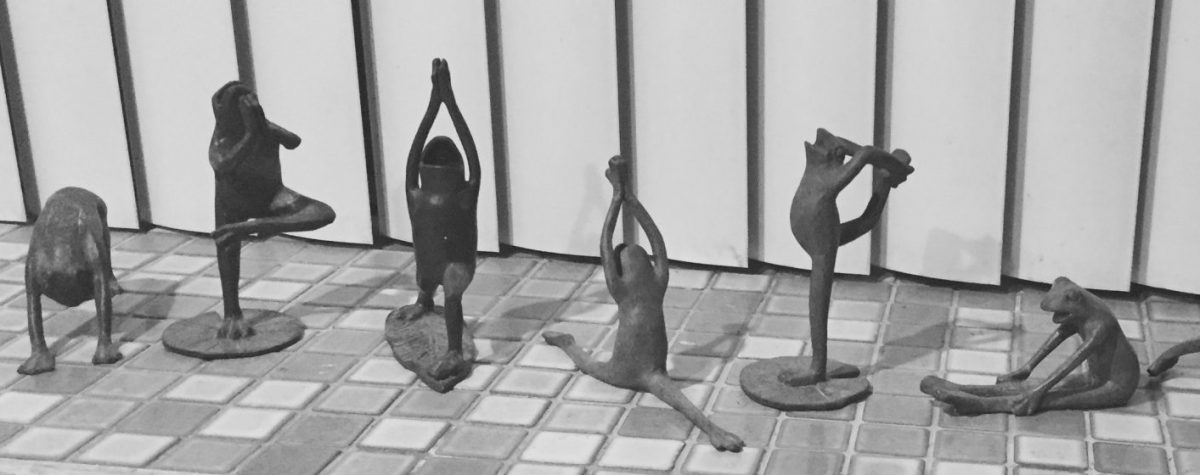
Start with a few simple, familiar āsana like Adho mukha śvānāsana (Downward-facing dog) and Adho mukha vīrāsana (Daownward-facing hero). Follow with a few standing poses: Utthita trikoṇāsana (Extended triangle), Utthita parśvakoṇāsana (Extended side angle), and Vīrabhadrāsana II (the second Warrior). Finish with a seated forward extension, say Paśchimottānāsana (Deliberate stretch of the west), or lie down with your legs up the wall (Ūrdhva Prasārita Pādāsana). Then rest fort several minutes – even when short on time, always practice Śavāsana (Corpse).

Cultivate the Voice:
Maybe at first you’ll hear your class teacher’s voice reminding you to engage ‘here’, and ‘not there’). Eventually, you’ll cultivate your own teacher inside. If you’re not sure about something, ask your teacher later. Remember, that if it doesn’t feel right, then you probably ought not to be doing it. Also, remember to refrain from doing āsana you are not confident doing; save those for class when someone else can supervise.

Work by the Book:
B.K.S. Iyengar’s Yoga The Path to Holistic Health is abundant with information. One whole section details how to, and which props to use in the different āsana. As well as listing the Benefits and Cautions. Another section is devoted to sequences for particular ailments. Dr. Geet Iyengar’s Preliminary Course has detail, step-by-step instructions and drawings to assist in executing the poses. Metha’s How to Use Yoga, and Yoga the Iyengar Way, both have large photos to further guide you.

When you’ve been self-practicing for a while, try to remember the poses taught. Then write them down, in order, right after class. If you don’t remember the names, describe them or draw a little stick figure sketch. The more you do this the easier it becomes. Next day, recreate the sequence – or part of it – at home on your own. Try to recall the points the teacher made. When you do poses a second, third time, etc. – when you become your own teacher – the learning deepens; the experience becomes more profound, and more truly your very own.

Props:
Buy a mat and three blankets (you’ll need them for Sālamba sarvāṅgāsana I (the first Supported shoulder stand), which is vital to one’s practice. Also, a belt and a block or two are very useful. A timer will help you understand your tolerance in the different poses. Meaning, check the time after each to keep track of your progress (do not force anything, at any time).

Sequencing the Postures:
As a rule, Downward-facing dog and/or Downward-facing hero are good ‘warm-up’ poses. Follow-up with a standing postures, onto an inversions, a back extension, a twists, and a forward extension. Often, Sālamba sarvāṅgāsana I (the first Supported shoulder stand) is done near the end of your practice. However, as a rule, if you practice Sālamba śīrṣāsana I (the first Supported headbalnce), do so close the the beginning of your practice (say after Downdog). Headstand must be followed with Shouderstand later in the sequence, or another pose (say Setubandha sarvāṅgāsana) which creates the Jalandhara bandha, or conjunction between the chin and the top of the sternum.

Do the Pose Everyway:
Try the pose many different ways. For example, one day do Utthita trikoṇāsana with your front foot up the wall. Another day, with your back heel at the wall. Or with your back to the wall. The goal isn’t to find the way that works best for you, so you can repeat it that way every time. The goal is to experience the pose from every angle, to learn all about it. Become as familiar with these poses, as you are with your room (where you can walk around in the dark without bumping into furniture). In time, the poses become templates used to explore the mind, the senses, the emotions, …our place in the world, and our relationship to the Higher Power.

Richard Jonas is a faculty member of the Iyengar Yoga Association of Greater New York.