Step-by-Step Guide & Free Video Tutorial
Viparīta karaṇi [inverted action], commonly known as Supported Legs-Up-the-Wall Pose, is a deeply calming restorative inversion. Practiced regularly, it can relieve fatigue, calm the nervous system, reduce swelling in the legs, and support healthy circulation. In this Viparīta karaṇi tutorial, we’ll guide you through three key variations of Viparīta karaṇi—ranging from beginner-friendly to advanced—with a free instructional video and detailed images to support each stage of the pose.
Whether you’re a new student with tight hamstrings or an experienced practitioner aspiring to practice the forward roll entry, this Viparīta karaṇi tutorial will help you develop confidence and technique in this classic Iyengar Method posture.
1. Viparīta karaṇi for Beginners: Angled Bolster Setup
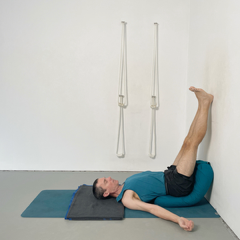
The first variation is ideal for newer students or anyone with tight hamstrings. Instead of placing the bolster parallel to the wall, it’s angled upward with a portion tucked up the wall to help elevate the pelvis and reduce strain in the legs.
Key setup points:
Bolster angled with roughly one-third tucked up the wall
A flat blanket cushions the head
Legs rest at approximately a 60-degree angle
Step-by-Step Instructions:
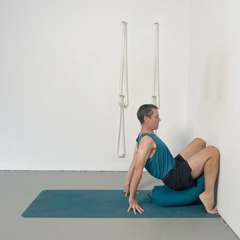
- Press hands into the floor to lift the pelvis onto the bolster
- Walk the feet and hips closer to the wall in stages
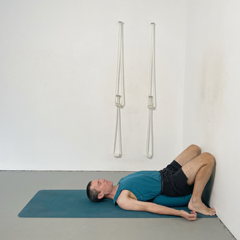
- Only straighten the legs once the pelvis is securely supported
2. Intermediate Variation: Classical Setup with Side Entry
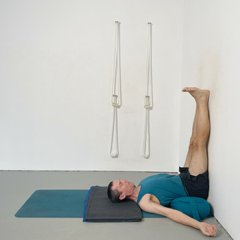
This version brings the hips directly into contact with the wall for a more traditional alignment. The bolster is now placed parallel to the wall, with a small gap left to allow the tailbone to drop slightly.
Setup details:
Bolster parallel to the wall with a few centimeters of space
Blanket under the head remains in place
Entry technique:
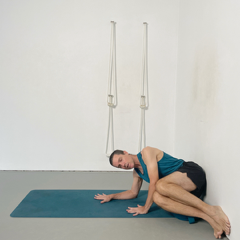
- Sit sideways on the bolster
- Hug knees and use the hands and forearms to rotate onto the back

- Carefully swivel the legs up the wall while keeping both sitting bones in contact with the wall
3. Advanced Variation: Forward Roll Entry for Experienced Students
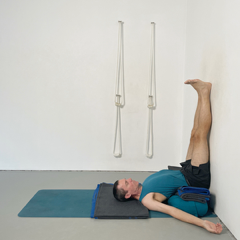
For those comfortable with inversions and looking to deepen their practice, this variation teaches how to forward roll into Viparīta karaṇi. This action allows for a higher lift under the pelvis, using additional blankets for support.
Setup:
Bolster positioned further from the wall with two neatly folded blankets stacked on top
Optional block at the wall to gauge distance
Technique overview:

- Position hands forward of the head and place crown of head on the mat
- Press hands firmly, tuck toes under, and lift knees
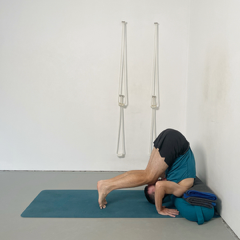
- Walk in until shoulders contact the bolster, then use controlled pressure to bring the pelvis to the wall
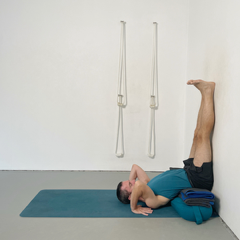
- Slide into position, ensuring even blanket distribution and correct spinal alignment
Key Benefits of Viparīta karaṇi
• Calms the nervous system
• Promotes a parasympathetic response, helping reduce anxiety and stress
• Supports circulation: Elevates the legs to help reduce swelling and fatigue
• Improves breath awareness: Gentle elevation of the chest and abdomen enhances natural respiratory rhythm
• Restores energy: Reverses the effects of gravity and long periods of standing or sitting
• Safe inversion alternative: Offers many of the benefits of shoulderstand with less strain
Watch the Free Class
This Viparīta karaṇi tutorial is available in full on Yoga Selection. You’ll receive step-by-step guidance for all three variations, detailed prop setups, and troubleshooting tips to help you build confidence—especially with the forward roll entry.
Viparīta karaṇi – Iyengar Method Tutorial for Beginners to Advanced + Step-by-Step Props Guide
FAQs
How long should I stay in Viparīta karaṇi? Anywhere from 5–15 minutes is typical. Longer holds allow for deeper relaxation, especially in restorative practices.
Can I do this pose if I have neck issues? Yes, but stick with the beginner or intermediate version. The forward roll should only be attempted once you’re confident and have no contraindications.
What props do I need? A yoga bolster, at least three blankets, and a block. You can modify with cushions or firm pillows if needed.
Is this pose safe during menstruation? Although Viparīta karaṇi is a rejuvenating restorative pose, it is still considered an inversion. Other poses such as Setubandha sarvāṅgāsana may be better choices during menstruation.
Final Thoughts on Viparīta karaṇi
Viparīta karaṇi offers a restorative pathway into the benefits of inversions. Whether you’re just starting or looking to refine your technique, the step-by-step guidance in this tutorial and accompanying class will help you practice with clarity, alignment, and confidence.
Originally posted here
To view Lois Steinberg’s version in Sālamba śīrṣāsana use the following link:
 Rafael Durán