Blog

Iyengar Method of Yoga Explained: A Beginners Guide

November 22, 2023
Written by Sarah Williams

B.K.S. Iyengar (1918-2014) is arguably one of the most well-known and influential yoga teachers within modern postural yoga. Named as one of the hundred most influential people in the world by Time magazine in 2004 Iyengar’s impact reached far beyond the yoga studio.

Spanning a life of almost 100 hundred years he went from sickly child to international Guru who wrote one of the best-selling yoga books of all time and pioneered a precise approach to yoga that used props to help the physical, mental, and intellectual body to align.

Occasionally throughout history, there have been individuals whose achievements leave a positive mark across the entire world. B.K.S. Iyengar was such a person.”  Iyengaryogalondon.co.uk

In this article we’ll look at:

  • The life behind the teacher
  • Philosophical influences on the Iyengar Method of Yoga
  • Āsana approaches

B.K.S. Iyengar – The Child
The approach of a young child to yoga is very different from that of an adult.” – B.K.S. Iyengar

Bellur Krishnamacarya Sunderaja Iyengar was one of 13 born into a poor brahmin family in Karnataka, India. His beginnings were rife with illness and during his childhood, he suffered from typhoid, malaria, and tuberculosis all of which impacted his education and well-being.

B.K.S. Iyengar – The Student
Yoga works on each individual for his or her growth and betterment, physically, mentally, emotionally, and spiritually.” – B.K.S. Iyengar

Iyengar began yoga studies under the tutelage of his brother-in-law Śrī Tirumalai Krishnamacharya in Mysore at the age of 15. Krishnamacharya had little faith in Iyengar’s prospects as a yogi due to his physical health, but it was through yoga that Iyengar found a mode of healing and well-being.

As a teacher, Krishnamacharya was renowned for his fierce and uncompromising manner* towards his students, and it is said to have offered very little direct tutorage to Iyengar. Along with Krishnamacharya’s other students, K. Pattabhi Jois, Indra Devi, and T.K.V. Desikacha, Iyengar became one of the most influential yoga teachers of the 20th century.

B.K.S. Iyengar – The Teacher
It is relatively easy to be a teacher of an academic subject, but to be a teacher in an art is very difficult, and to be a yoga teacher is the hardest of all, because yoga teachers have to be their own critics and correct their own practice.” – B.K.S. Iyengar

At just 18 Iyengar was sent to Pune to teach yoga. Resisting the traditional path of other yogis, Iyengar did not choose to become a sannyasi [a renunciate, or someone who has given up life as a householder] which subsequently allowed him to marry and become a father.

In life, we have a lot of responsibilities. It is not meant for renunciation. We live in this society and it is our duty to give back to our society. Renunciation comes to me when I am 96. Renunciation means giving up the enjoyment of worldly happiness. But I am full of inner happiness.” – B.K.S. Iyengar

It was Iyengar’s relationship, both as a student and friend, with internationally renowned violinist Yehudi Menuhin in the 1950s that propelled him to success in the West. Menuhin said, “I consider B.K.S. Iyengar to be my first real violin teacher. He is the first to teach me how to use my body”.

Iyengar began teaching at the London Education Authority in the 1960s on the basis that the teachings be predominantly physical omitting the philosophical and spiritual aspects of yoga. This paved the way for the first Iyengar Institute in the West.

Iyengar’s biomedical dialect made postural yoga appealing to a wide array of modern urban individuals.” Andrea Jain in Selling Yoga

Iyengar was a charismatic teacher and despite being notorious for his temper*, he was also known by his students for his sense of humor and compassion. Notably, his radical approach to teaching was founded on the notion that yoga was for everyone regardless of race, gender, or class.

After the death of his wife, Iyengar established the Ramamani Iyengar Memorial Yoga Institute in Pune in 1975 where he taught with his children Geeta and Prashant. Iyengar spent the rest of his life at the RIMYI and continued to teach well into his 90s.

Iyengar Method – The Training
Yoga is my way of life.” – B.K.S. Iyengar

There are thousands of trained Iyengar Method teachers throughout the world, all of whom have undertaken the rigorous program of teacher training. At least eight years of study are required before entering the two-year introductory certificate program. Senior Iyengar Method teachers must undertake mandatory in-depth training to progress in their teaching.

Iyengar Method – The Philosophy
Yoga does not just change the way we see things, it transforms the person who sees.” – B.K.S. Iyengar

B.K.S. Iyengar refers to the practice of yoga as “meditation in action”. His approach to the philosophical concepts of yoga was heavily underpinned by the classical yoga of Patañjali. In the Yoga Sūtras of Patañjali, we find the eight limbs of yoga which is a systematic approach to living a purposeful life and path to samādhi.

The eight limbs of yoga, also known as Aṣṭāṅga yoga (not to be confused with K. Pattabhi Jois’s Aṣṭāṅga vinyasa), provide a holistic guide to life with attention to ethical conduct, discipline, self-inquiry, and spirituality. The first four stages are concerned with refining aspects of daily life before diving deeper into the subtleties of meditation and consciousness.

Let’s take a look at the philosophical inquiry behind Iyengar’s method in more detail.

1 | Yamas – Often referred to as ethical standards, or restraints, the five Yamas set out a code of behaviors to live by. Consider these the do not’s:

  • Ahiṃsā – non-violence (lit., non-harming)
  • Satya – truthfulness (not lying)
  • Asteya – non-stealing
  • Brahmacharya – self-restraint, (not distracted)
  • Aparigraha – non-avarice, non-hording, or non-possessiveness

2 | Niyamas– A compliment to the Yamas are five Niyamas considered the ‘inner observances’, and help us to act appropriately. [Regard] these as the do’s:

  • Śauca – cleanliness, purity (external and internal)
  • Saṇtoṣa – contentment
  • Tapas – self-discipline, spiritual austerity, and persistent meditation
  • Svādyāya – study of the sacred scriptures (for one’s liberation)
  • Īśvarapraṇidhāna – dedication, or surrender (to a Supreme/God)

3 | Āsana – The physical postures, and the dominant form of yoga associated with modern practice.

4 | Prāṇāyāma – The practice of focusing on the breath. Eventually a means to activate prāṇa, or energy, prāṇāyāma is thus the control of the breath or breathing exercises. [It must first begin with studying one’s breath.]

5 | Pratyāhāra – Often referred to as detachment from the external (such as cravings or drama), pratyāhāra is the withdrawal of the senses and a tool for turning towards the internal.

6 | Dhāraṇā – Concentration, or focus on a single mental object, is the practice of dhāraṇā.

7 | Dhyāna – Meditation is the focus of this limb. Dhyāna differs from concentration as it is a wider state of awareness, and not reliant on a fixed mental point.

8 | Samādhi – A state of being that is at one with all that is around us, with the universe. A kind of enlightenment, or bliss, is used to describe the state of samādhi. [Another is a ‘settled’ of the mind.]

Iyengar Method – The practice
Iyengar prescribed a thoroughly individualistic system of postural yoga that was a rigorous and disciplined form of body maintenanceAndrea Jain in Selling Yoga

The Iyengar Method is one of the first world-wide ‘brands’ of yoga and was initially successful because of its focus on physical methods with little focus on the wider teachings of yoga. This accessible approach to what was previously an esoteric practice used physical exercise to draw people in.

There are three important components of the Iyengar Method which provide a good insight into the style: alignment, sequencing, and the use of props.

ALIGNMENT
“The body cannot be separated from the mind, nor can the mind be separated from the soul” – B.K.S. Iyengar

The precise approach to the performance of postures in the Iyengar Method is detailed and specific. Postures are held for a longer duration than in many other styles allowing time to work with alignment, breath, corrections, and adjustments while in the shapes.

There is an emphasis on learning and progression through the alignment principles on account of the demanding attention and awareness required. ‘Good alignment’ means that the whole physiological and mental system is balanced.

SEQUENCING
In India, āsana was never considered to be a merely physical practice as it is in the west.” – B.K.S. Iyengar

Iyengar’s is a methodical approach to sequencing postures and aims to prepare the body for opening in a safe way. Unlike many other styles, the Iyengar Method does not require warming sequences such as sun salutations (sūryanamaskāra). It often features poses being held for longer periods, sometimes up to 10 minutes, which are said to help to build strength, flexibility, as well as, focus. Classes generally end with a ‘re-invigorating’, or ‘re-energizing’ posture (śavāsana) to cultivate vitality.

PROPS
“But even in India, nowadays many people are beginning to think in this way because they have picked it up from the people in the West whose ideas are reflected back to the East.” – B.K.S. Iyengar

Considered a pioneer in the use of ‘props’, (Iyengar developed the use of belts, blocks, straps, walls, sandbags, chairs, stools, ropes, bolsters, sticky mats, and more), in order to provide support and help those with limitations, lack of experience, or injuries. The use of props compliments the alignment principles, and helps students to perform each pose safely.

Iyengar Method – Proposed Benefits
Your body exists in the past and your mind exists in the future. In yoga, they come together in the present. – B.K.S. Iyengar

Like other styles of yoga, the Iyengar Method is a good approach to improving health holistically. More specifically it claims to:

  • Increase strength and flexibility
  • Improve posture
  • Boost energy
  • Reduce chronic pain symptoms
  • Lower blood pressure
  • Improve concentration

B.K.S. Iyengar’s Writing
My subject is yoga – the path which cultures the body and senses, refines the mind, civilizes the intelligence, and takes rest in the soul which is the core of our being.” – B.K.S. Iyengar 

Light on Yoga is arguably one of the most widely known books on yoga, and includes over 600 photographs of 200 āsana accompanied by instructions on how to do the poses and gain their benefits. It has been translated into 23 languages since being published in 1966, and has been referred to as “the bible of modern yoga”. [Originally, this book was intended for those without a certified Iyengar Method instructor (CIYT).]

If you’re eager to find out more about the man and the practice of B.K.S. Iyengar then his Light on [series of books] is a good place to start:
Light on Yoga 
Light on Life
Light on Prāṇāyāma
Light on the Yoga Sutras of Patañjali

Key Takeaways
Iyengar’s is a methodical approach to the practice of yoga and its success rides on the teachings of the man who pioneered a brand of yoga for householders that was both challenging and therapeutic.

Yoga is a light, which once lit, will never dim. The better your practice, the brighter the flame.” – B.K.S Iyengar

[* A student originally teaches as s/he was taught]

Plantar Fasciitis, Myofascial Connections and Yoga

By Ray Long, MD

The therapeutic benefits of Haṭha-yoga arise from whole body energetic balancing combined with distinct biomechanical adjustments. We gave an example of this in our last blog post, where we looked at the disorder known as adult acquired flatfoot deformity, its biomechanical basis and how to utilize yoga to maintain healthy foot arches. In this post we focus on the plantar fascia of the foot and examine the most common cause of heel pain—plantar fasciitis—to see what happens when things go wrong. Finally, we consider how yoga can be used to bring things back into balance and even to prevent this condition. First, let’s look at fascia in general.

A fascia is a fibrous structure that is formed from sheets of connective tissue. The deep fascia covers and invests muscles, tendons, ligaments and blood vessels throughout the body. An important example of a deep fascia is the thoracolumbar fascia. All yoga practitioners should be familiar with this structure and its myofascial connections, as it forms a critical support system for the lumbar spine and sacroiliac joint. Other types of fascia include the superficial fascia of the subcutaneous tissue (under the skin), and the visceral and parietal fascia, which surround organs such as the heart and lungs. Figure 1 illustrates the deep fascial elements of skeletal muscles. Click here to see this in the context of stretching and Hanumanasana (front splits).


Figure 1: The deep fascia covering and investing skeletal muscle.

The plantar fascia or plantar aponeurosis (you can use either term) originates from the medial tubercle of the calcaneus (heel bone) and continues forward to attach to the proximal phalanx of each of the toes (via the plantar plates). Extending (dorsiflexing) the toes tightens the plantar fascia, thus elevating the foot arch. During this process, the metatarsal heads act as pulleys to form a “windlass” that tightens the plantar aponeurosis. The plantar fascia has elastic qualities in that its fibers are somewhat wavy in the relaxed position. These fibers straighten in response to forces applied (like the heel-off phase of gait). Thus, the plantar fascia can store energy like a spring. Figure 2 illustrates this concept.


Figure 2: The windlass mechanism of the plantar aponeurosis (fascia).

The plantar aponeurosis also forms a myofascial connection with the muscles of the calf (gastrocnemius and soleus) via the Achilles’ tendon and, by extension, the hamstrings (and potentially other muscles of the posterior kinetic chain). Forces that stretch the plantar fascia are distributed along these muscles. Conversely, tightness in these muscles can adversely affect the function of the plantar fascia and thus the arch of the foot. Figure 3 illustrates these myofascial connections in adhomukha śvānāsana. (downward facing dog).


Figure 3: The myofascial connections to the plantar fascia in adhomukha śvānāsana.

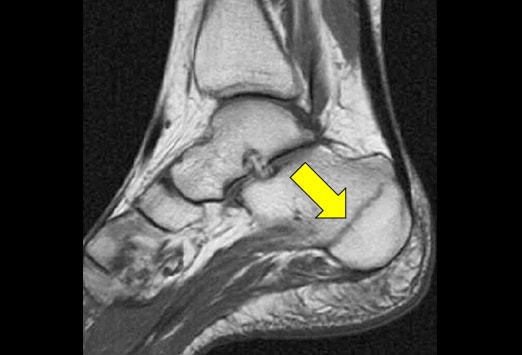
Plantar fasciitis is an overuse injury related to repetitive overstretching of the plantar aponeurosis. In this condition the forces of gait are concentrated where the plantar fascia attaches to the calcaneus, instead of being distributed over the fascia and the muscles at the back of the legs. This results in microtrauma to the plantar aponeurosis near its origin, causing inflammation and heel pain. Risk factors for developing plantar fasciitis include tight calf muscles and hamstrings, endurance-type weight bearing activity (such as running) and a high body mass index. Figure 4 illustrates plantar fasciitis. Click here to see a reference MRI image of this condition.


Figure 4: Plantar fasciitis (note the inflammation at the origin of the plantar aponeurosis).

Note that there are other conditions that can cause heel pain. An example of such a condition is a stress fracture of the calcaneus, which is also seen in runners. This problem is treated differently from plantar fasciitis. Accordingly, if you have heel pain be sure to consult a health care practitioner who is appropriately trained and qualified to diagnose and manage such conditions. Use your knowledge of pathological conditions to deepen your understanding of the body and to work with yoga as an adjunct in prevention and treatment.

Since one of the most important aspects of managing this condition is stretching of the plantar fascia, heel cords (gastrocnemius/soleus complex) and hamstrings, yoga offers an ancient preventative solution. For example, adhomukha śvānāsana stretches both the hamstrings and heel cords. Click here to see how to use reciprocal inhibition to release the gastrocnemius and soleus muscles and allow the heels to lower to the floor in adhomukha śvānāsana.


Figure 5: Stretching the plantar aponeurosis (fascia) in chaturaṅga daṇḍāsana.

Chaturaṅga daṇḍāsana (four limbed staff) stretches the plantar fascia itself. Use this image to aid in visualization of this process while in the pose. One of our previous posts gives some tips on how to ease into Chaturaṅga daṇḍāsana and another describes a key muscular co-contraction in this pose.

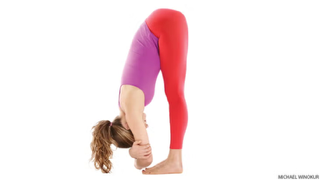
Uttanāsana (standing forward extension) illustrates a stretch of the posterior kinetic chain, linking to the feet (figure 6). Click here for a tip on integrating the hip abductors to access sacral nutation to refine Uttanasana. Thus, we can see that the Sun Salutations (Surya Namaskar) offer an ancient self-contained method for working with the plantar fascia and its myofascial connections to maintain a healthy foot arch. For many more tips and cues like this, check out the Yoga Mat Companion book series and The Key Muscles and Key Poses of Yoga.


Figure 6: The posterior kinetic chain and its connection to the feet in Uttanāsana.

We conclude with a step-wise technique on using biomechanics and physiology to lengthen the heel cords in jānu śīrṣāsana (seated forward extension):

Step one: Bend the knee about 15 degrees to release the gastrocnemius muscle at its origin on the posterior femur.

Step two: Use the hands to gently draw the ankle into dorsiflexion and stabilize it in this position by engaging the biceps to flex the elbows. The cue I use for this is to “draw the top of the foot towards the front of the shin (dorsiflexion).”


Figure 7: Steps to release and then lengthen the calf muscles in Janu sirsasana.


Step three:
Hold the foot in place and gradually engage the quadriceps to straighten the knee. Ease into this position. Maintaining the ankle in some dorsiflexion with the arms and extending the knee distributes the stretch throughout the calf muscles (the gastrocnemius and soleus) as illustrated here.


Figure 8: The myofascial connection between the plantar fascia, heel cord and calf muscles.

You can add a facilitated stretch to the calf by gently pressing the ball of the foot into the hands for 8-10 seconds and then taking up the slack by further dorsiflexing the ankle. This activates the Golgi tendon organ at the muscle tendon junction, resulting in relaxation of the contractile elements. We describe a similar technique to lengthen the hamstrings, as well as the physiological basis for facilitated stretching in our blog post on how to lengthen the hamstrings in jānu śīrṣāsana.

Chris Macivor is the graphic designer
Originally posted here

Salamba Purvottanāsana

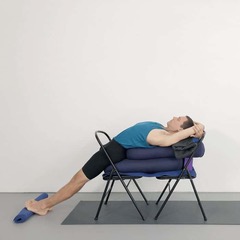
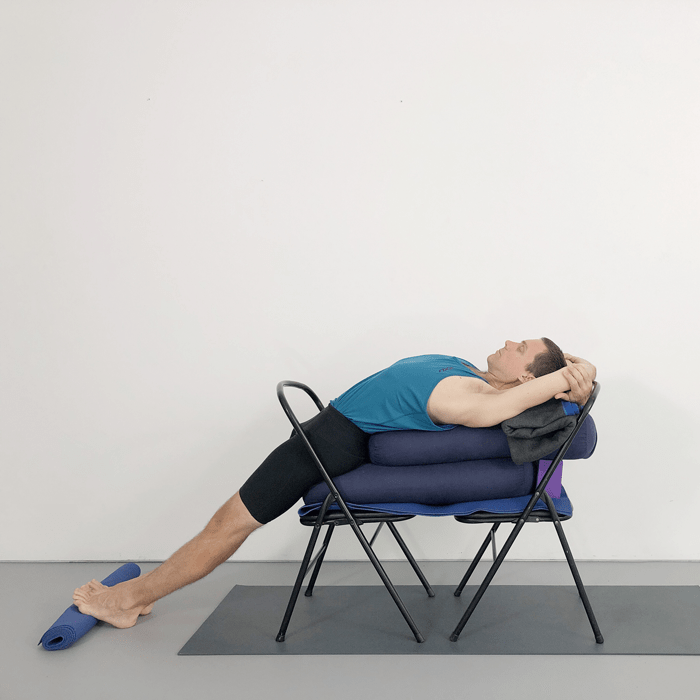
Salamba Purvottanāsana is a great example of an Iyengar method restorative pose that can help rejuvenate energy levels. Much of what is today known as restorative yoga has evolved from the teachings of the contemporary Indian yoga master B.K.S. Iyengar. His innovative usage of props allows the practitioner to remain in supported positions for longer periods of time, in yoga poses that might otherwise involve effort and fatigue.

The supported version of Purvottanāsana described in this post is well suited to times of tiredness or illness, and has many potential therapeutic applications. It is a great pose to include in a home yoga practice at times when energy needs to be preserved. Whilst in the pose the chest is held in an open but supported position. The degree of chest opening is similar to what might be achieved with more dynamic backbends, but can be sustained for a considerably longer duration of time. A practitioner would ideally stay in this pose and soak up it’s benefits for at least five or ten minutes. Remaining in the pose for an extended period of time has a calming effect on the nervous system. It can help to combat stress and counteract lethargy from mental and physical exertion.

Set up your chairs and other props

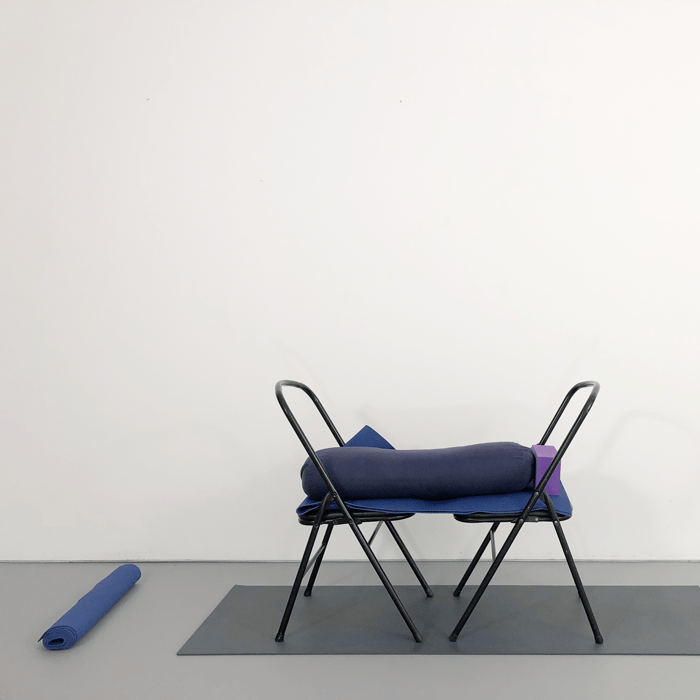
  • Position two chairs closely together so that the fronts are facing.
  • Fold a yoga mat in half, and drape the mat over the seat of both chairs. This will help to link the chairs together and prevent them from sliding apart.
  • Place a bolster on the seat of the chairs.
  • Ensure that the end of the bolster is level to the edge of the first chair that you will be sitting on.
  • The other end of the bolster will not quite reach the edge of the other seat. Place a block on its side edge in the section of the seat that overlaps the end of the bolster. This block will help to support the next bolster layer and will prevent your head and shoulders from sinking downwards.

Build a bit more height

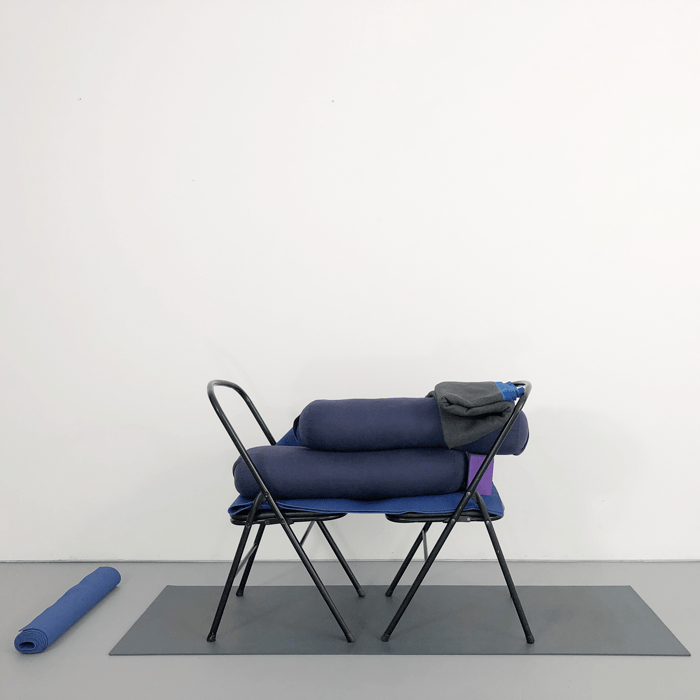
  • Now place a second bolster on top of the first.
  • Ensure that the top bolster overlaps the bottom bolster by around 20cm or 8 inches. The exposed section of the bottom bolster is where you will eventually sit.
  • The other end of the top bolster will be supported by the block.
  • Place a three-fold blanket at the end of the top bolster. Your head will eventually rest onto this blanket.

Position yourself

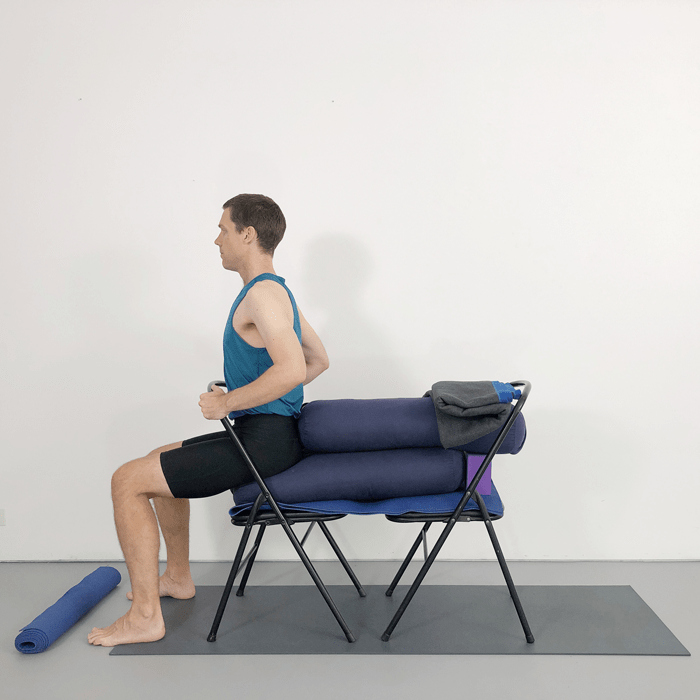
  • Before lying back over the chairs, prepare a support for the balls of your feet. A rolled yoga mat is ideal for this purpose, but other nearby objects will do in a pinch. Anticipate how far this foot support will need to be away from the chair, and place it in position.
  • To position yourself on the support, begin by sitting on the top bolster with your legs straddling either side of the support. Bring one leg through the inside of the chair frame and then slide forwards so that you are sitting on the bottom bolster.
  • Keep your knees bent and have your feet flat to the floor, as you lie back over the top bolster.
  • Position head on the three-fold blanket so that the tops of your shoulders are level to the edge of the blanket.
  • Tuck buttocks towards your knees.
  • Now straighten the legs.
  • Turn inner thighs down, calves outwards, and press your big toe bases down and into the rolled mat.
  • Allow arms to release down by your sides.

Relax…

  • In addition to having arms hanging down by your sides, another option is to fold and bring them overhead to rest on the support.
  • Fold your arms in such a way that, gently clasp each elbow with the fingers .
  • This light grip is sufficient to stabilise your elbows at a shoulder width distance. You can then consciously allow shoulders to release in a downward and outward direction.
  • As you remain in the pose observe how your breath starts to become soft and smooth.
  • As chest is lifted up by the supports, allow your abdomen to relax and release in a downward direction.
  • Ensure that your jaw muscles, tongue and eyes are free from tension.

Conclusion

Salamba Purvottanāsana is a rejuvenating pose that is commonly used in the Iyengar method. It can have specific therapeutic applications in a yogāsana class context, but is also a great pose to include in one’s home practice. It is an ideal pose to practice during times of fatigue or low energy. Remaining in this pose for around ten minutes will maximize its potential benefits.

Originally posted here

To view Lois Steinberg’s variations use the following link:
https://vimeo.com/601341143

How To Do the 4-7-8 Breathing Exercise

Focusing on regulating your breath can help calm your mind

September 6, 2022/Cleveland Clinic healthessentials

The late Buddhist monk Thích Nhất Hạnh once wrote, “Breathing in, I calm body and mind. Breathing out, I smile. Dwelling in the present moment, I know this is the only moment.”

How incredibly peaceful does that sound? Breathing techniques like 4-7-8 breathing can help you tap into your inner calm, benefitting everything from your stressed-out nervous system to how well you sleep at night.

Integrative medicine specialist Melissa Young, MD, explains how to do this soothing style of breathing and what health benefits it can provide.

What is 4-7-8 breathing?
The 4-7-8 breathing technique is a style of intentional breathwork that can calm your mind and body. Though popularized in 2015 by integrative medicine specialist Andrew Weil, MD, it has ancient roots in the yogic practice of prāṇāyāma, or focusing on the breath.

The gist of it goes like this:

Inhale through your nose for four counts.

  1. Hold your breath for seven counts [regard it as a pause, rather than as a ‘holding’].
  2. Exhale through your mouth for eight counts [exhale through the nose, as directed by Mr. Iyengar in Light on Prāṇāyāma].

But there’s a little bit more to it if you want to ensure that you’re tapping into all of its health benefits.

The benefits of 4-7-8 breathing
“Yoga breathing techniques calm the body down and bring it into a more relaxed state,” Dr. Young explains. “This kind of breathing can help us focus our mind and our body away from worries and repetitive thoughts.”

She goes deeper into what this breathing technique can do for you.

Calm your mind
The repetitive nature of 4-7-8 breathing provides a calming distraction to your racing mind. “The counting sequence is a way to focus your mind on something other than your worries,” Dr. Young says.

Reduce stress and anxiety
Your sympathetic nervous system is responsible for your body’s “fight-or-flight” response. When you’re stressed, this system goes into overdrive, which makes you feel amped-up — like a fast-beating heart, shallow breathing and other telltale signs of stress, like sweaty hands and an upset stomach.

Your parasympathetic nervous system is responsible for relaxing your sympathetic nervous system and helping you calm down. “Breathing techniques like 4-7-8 breathing can play a huge role in activating your parasympathetic nervous system and helping you to shift back toward tranquility,” Dr. Young says.

Help you sleep
Forget counting sheep and skip right to counting your breath. Calming your mind and reducing your anxiety can go a long way toward a good night’s sleep, and 4-7-8 breathing is associated with both. It’s also been shown to decrease heart rate and blood pressure, which put your body in the right state for sleep.

Train your body to better respond to stress
They say you can’t teach an old dog new tricks, but with practice and repetition, you can teach your nervous system to do some pretty cool things.

“It takes some time for the nervous system to respond to this type of breathwork,” Dr. Young says. “The more we do it, the more we allow our bodies to go into that parasympathetic mode.”

If you regularly practice 4-7-8 breathing (especially during times when you’re not particularly stressed), your body will actually learn to incorporate it into your go-to stress response.

How to do 4-7-8 breathing
You can do this practice in any position, though Dr. Weil recommends sitting up with your back straight. If you’re using 4-7-8 breathing to help you fall asleep, though, you can even do it while lying in bed.

Here’s how to do it:

  1. Position your tongue. Throughout this breathing technique, your tongue should stay toward the roof of the mouth, with the tip of your tongue touching the back of your two front teeth [no, keep your tongue passive
  2. as directed by Mr. Iyengar in Light on Prāṇāyāma]*.
  3. Breathe out deeply. “With any breathing technique, it’s ideal to start with an exhale,” Dr. Young says. Let your breath out through your lips, making a whooshing sound [no, breathe through the nose as directed by Mr. Iyengar in Light on Prāṇāyāma]*. Now you’re ready to begin counting .
  4. Inhale and count to four. Breathe in through your nose while mentally counting up to four. Don’t go too slowly or too quickly; pick a pace that works for you.
  5. Hold and count to seven. Without straining or stressing, gently hold your breath while counting to seven in your mind [regard it as a pause, not a ‘holding’].
  6. Exhale and count to eight. Breathe out slowly for eight counts, with your lips slightly pursed around your tongue. “You should hear that whooshing sound,” Dr. Young says. Congrats! You’ve now completed one cycle of 4-7-8 breathing [exhale through the nose, as directed by Mr. Iyengar in Light on Prāṇāyāma].
  7. Repeat the process. Do steps three through five again for three more cycles: Inhale through your nose for four counts; hold your breath for seven counts [Regard it as a pause, not as a ‘holding’]; exhale through your mouth for eight counts [exhale through the nose, as directed by Mr. Iyengar in Light on Prāṇāyāma].

Dr. Young warns that when you’re first starting out learning 4-7-8 breathing, you may experience a little bit of lightheadedness or shortness of breath. But this is just a function of learning to breathe more slowly.

“So, many of us just aren’t used to focusing on our breathing,” she says. With a little bit of practice, your body will soon adjust.

Tips for 4-7-8 breathing
Although 4-7-8 breathing is a fairly simple, straightforward technique, it’s a powerful one that can pay off big for your mind, body and spirit. Dr. Young shares some additional insight into making it work for you.

Fine-tune your practice
In the beginning, don’t put pressure on yourself to go at a snail’s pace. No one expects you to master your breath on the first try (or even the second or the third or the 20th), so allow yourself to go at whatever pace feels right for your skill level.

As you become more skilled at 4-7-8 breathing, you’ll be able to slow things down for deeper relaxation benefits. “The counting and the ratio of your breath will stay the same, but you can readjust the pace to your comfort,” Dr. Young notes.

Do it twice a day
Practice makes progress! The more you do 4-7-8 breathing, the better at it you’ll become, and the more your body will begin to incorporate it into your stress response. Dr. Young suggests doing three cycles of this breathing technique twice a day. “You’re going to see results really quickly,” she says.

Make it a habit
Identify two recurring moments during your day that you can designate for practicing 4-7-8 breathing. Whether you do it when you wake up, after you get off work or right before you get in bed, setting a time for it can help you to stick with it and adopt it as an ongoing practice.

“Getting into a habit at certain times of the day makes it easier to stay with it,” Dr. Young says. “It doesn’t matter when you do it; it just matters that you actually practice it.”

To hear more on this topic, listen to the Health Essentials Podcast episode, Breathwork for Beginners. New episodes of the Health Essentials Podcast publish every Wednesday.

* Mr. Iyengar writes in Light on Prāṇāyāma, #32 of Cautions and Hints: “Saliva flows at the beginning of prāṇāyāma. Swallow after breathing out, but before breathing in, and never while holding the breath. Do not stiffen or press the tongue against the teeth and palate, but keep it and the throat passive.

** Mr. Iyengar writes in Light on Prāṇāyāma, #5 of Cautions and Hints: “Breathing in prāṇāyāma should always be through the nose, except where otherwise stated as in Ch. 24.” However, this chapter describes inhaling through on open mouth for Śītalī and Śītakārī prāṇāyāma with the tongue curled. Exhalation remains through the nose.

Pain-Free Forward Bends

If you’re having difficulty with forward bends, don’t assume it’s your hamstrings. Inflexible rotator muscles may be to blame.

Judith Hanson Lasater Yoga Journal Aug 28, 2007

There is an old Sufi story about philosopher-fool Nasrudin, who was looking for his house keys under a street light. A couple of friends happened by and joined in the search. Finally, in exasperation, one of the friends asked Nasrudin where he thought he had lost the keys. Nasrudin pointed to a spot some distance away where it was extremely dark. But why are we looking here then? he was asked. He replied: Because it is so much easier to see under the light.

This story reveals a common human tendency: to look where we want to instead of digging deeper to reveal the root of a problem. This is true of some yoga students who are trying to move deeper into their forward bends.

You attend class regularly, sometimes for years, practice at home, and make progress in most poses—except for forward bending. You seem to have hamstrings of steel! No matter how often or how long you practice, there doesn’t seem to be any change. One day while teaching, I realized that I was like Nasrudin. I was looking in the wrong place to find a solution for some students who, no matter how often or how long they practiced, did not experience any change in forward bending poses. I realized that, like the hamstrings, a group of muscles in the hip area—the external rotators—can interfere with the ability to bend forward.

Called the obturator externus and internus, gemellus superior and inferior, piriformis, and quadratus femoris, these muscles are short, broad, and very strong.

While each of these muscles is a separate structure, they function as one, working to externally rotate the femur (thighbone), stabilize the pelvis during walking, and help stabilize the pelvis and the femur together when you are standing on one leg. When you bend forward, all of the muscles on the back side of your body must lengthen, including the rotators.

An especially important rotator is the piriformis, which attaches to the sacrum and to the femur; the sciatic nerve passes directly under this muscle. A tight piriformis can do more than just limit your forward bends.

Folding Through Troubling Tight Rotator
When a tight piriformis presses down on the sciatic nerve, it can lead to ‘piriformis syndrome,’ which creates a radiating pain in the buttocks, down the back of the thigh, into the leg and foot.

And if this rotator is especially tight, it can pull on the sacrum, affecting the functioning of the sacroiliac joint (the joint between the sacrum and the pelvis). When the sacroiliac joint is dysfunctional, the lumbar (lower) spine can also be adversely affected.

So if your forward bends are limited, or if you’re experiencing ‘piriformis syndrome,’ it’s a good idea to continue to work on the hamstrings, but also include a few rotator stretches in your regular asana routine.

A note of caution: If the leg pain is great and/or persists, it is advisable to seek the treatment of a qualified health professional.

Walk the Walk for Flexibility
Walking has a phase called the swing phase in which you are, in effect, standing on one leg: One leg is the support leg and the other is swinging forward but has not yet touched down. Because gravity tends to pull down on the pelvis, we need the action of the rotators on the standing leg side to hold the head of the femur and the pelvis together in a stable position. Rotators tend to get tight when this action is exaggerated, like when you run or dance.

In order to understand this concept, try an experiment. Place your fingertips on the front of your pelvis, slightly to the side of the bony prominence called the ASIS (anterior superior iliac spine). Walk across the room and notice how these bony landmarks are held virtually level in relationship to the floor—this is because the rotators are holding the pelvis stable while you’re walking.

Now, keeping the hands as they are, raise the right leg in front of you as if you are about to take a step. Allow the left hip to sway to the left. The pelvis is now tipped downward on the right as the right rotators are relaxed. Place the right foot on the floor and try this experiment on the other side.

Dancers and Prancers Beware
Dancers and runners usually have tight rotators because they demand increased stability from these muscles. Dancers, for example, need stable rotators when standing on one leg and lifting the other leg up in an arabesque. They might be quite flexible in other ways, but often have tight rotators.

For runners, the increased momentum associated with the forward movement of the legs places greater demands on the rotators to hold the pelvis level.

Try this: Stand up and place the feet a foot or so apart with the feet turned out as in second position in ballet. In order to turn the feet out when standing, you contract your external rotators to rotate the femur. If you hold them in this externally rotated position as if they are tight, you will see how that interferes with forward bending. Hold the buttocks firm by squeezing them together; try to bend forward. Even if you are supple, this will be difficult. If, on the other hand, you turn the thighs inward, stretching as opposed to contracting the rotators, this will facilitate forward bending.

Now turn the toes and thighs inward as much as possible. Imagine that you are pressing outward with the heels but actually keep the feet still as you bend. It will be much easier to bend forward with the legs and feet in this position. This is because the external rotators are being stretched and thus are interfering less with the forward movement of the pelvis over the thigh bones.

Practice Makes Perfect in These Five Rotator Stretches
The five rotator stretches presented below are in order of increasing difficulty. The benefits they bring to other poses, such as uttānāsana (Standing Forward Bend), as well as to ease of walking, make them worth doing frequently. Because these poses can be deep stretches even for experienced students, attempt them when you are already warmed up by your regular yoga practice or some other physical activity. And remember: Recent research in muscle physiology has found that stretches need to be held for at least one minute in order to be effective. You may feel some of these stretches more on one side than the other. In fact, the longer you practice yoga, the more aware you will be of the differences between your right and left side. You may want to stretch the tighter side longer.

After each stretch, walk around the room to relax the rotators. You may discover that walking is easier as the rotators loosen. Try practicing a forward bend to see how it has changed. You may also notice that your Padmāsana (Lotus Pose) improves. Hopefully such observations will encourage you to make these poses part of your regular asana practice.

5 Rotator Stretches:

1. Reclining Twist
Lie on your back and bend the knees so that the feet rest on the floor. Inhale. As you exhale, bring the knees slowly to the chest one by one so that the lower back remains firmly on the floor. Squeeze your knees together and drop them to the left, keeping your shoulders on the floor. The legs should be approximately at a 90 degree angle to the body, but experiment to find the position that maximizes the stretch in your outer hips (especially the right one). As you stay in the pose, imagine that the belly is rotating in the opposite direction from the legs. Repeat on the other side.

2. Reclining Twist With Raised Knee
Lie on your back with your knees bent and your feet on the floor. Cross your right ankle over your left knee. Inhale. As you exhale, drop the legs to the left, bringing your right foot to the floor and keeping your shoulders on the floor. To increase the stretch, gently push your right knee away from you with your left hand. This should intensify the stretch in the outer right hip. If you don’t feel this stretch, experiment with the placement of your right foot; you may need to bring it closer to the hip or move it farther toward the knee on the floor. Repeat on the left side.

3. Standing Pigeon Pose
Place a blanket along the end of a stable, waist-high table. Lift your left lower leg onto the table with the knee bent; the shin and thigh should form a 90 degree angle. Keep the shin parallel with the far end of the table. Ideally, both your foot and knee should be resting on the table. If you find this too difficult, try a shorter table. You should feel the stretch in the outer hip and buttock of the left leg. If you are not feeling much of a stretch, bend forward as you exhale, making sure you don’t move your standing leg and knee. It is important that the forward bend comes from the hip joints. If you move from the hip joints, you should not feel a strong stretch in your back. If you bend from the spine, you will stress the lower back-and won’t stretch the rotators. You can further augment the stretch of this position by moving the supporting leg away from the table or moving the foot on the table away from your body. Repeat with the right leg on the table.

4. Modified Pigeon Pose
Start in Downward-Facing Dog (adhomukha śvānāsana). Step the right foot forward between the hands so that you are in a lunge position. Rest the left knee on the floor. Move your right foot so that it is exactly in the middle of your hands. Make sure that the right shin is perpendicular to the ground. As you exhale, let the right knee drop out to the right side. You will need to move your right arm out of the way. Place it where you need it for balance and then move your left leg and torso backward so that you actually open up the angle of the right knee; you will move your body slightly backward as you do this. It is important to keep the right foot slightly flexed so that you are putting weight on the outside rim of your foot and not your ankle.

Some students will be able to bring the left thigh and right buttock all the way to the floor, as in the splits. Use bolsters or blankets for support if you can’t reach the floor. As you allow the body to drop down, keep the middle of the pubic bone exactly in line with the right heel.

Most students, when they feel the deep stretch in the right rotators in this pose, will shift the pelvis to the right. It is better to keep the body a little higher and toward the left than to shift the pelvis off to the right side. After several breaths, repeat this pose on the left side.

5. Twisting Lunge
Start in Downward-Facing Dog. Step the left foot forward between the hands so that you are in a lunge position. Rest the right knee on the floor. Make sure that the left shin is exactly vertical. Place the right forearm down on the floor and place the right palm over the instep of the left foot.

Gradually let your body weight down onto your forearm. With your left upper arm on the outside of your left thigh and your left hand on your shin, hug your left leg toward your heart so that the chest drops down and you turn your breastbone toward the inside of the left leg. (Your hips will not be square in this position.) Keep the left shin vertical and the left foot flat on the floor. Repeat on the other side.

About Our Author
Judith Lasater, Ph.D., P.T., author of Relax and Renew and A Year of Living Your Yoga, has taught yoga internationally since 1971, [and was an early disciple of B.K.S. Iyengar.]

Rosa Parks Was a Yogi:

‘The Civil Rights icon often took care of herself’


Jacqueline Howard

If you look closely, you can see a twinkle in her eye.

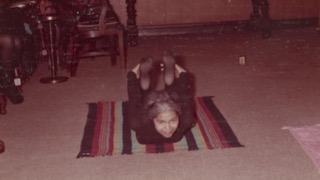
The Library of Congress image, taken in Detroit in March 1973, shows the late civil rights leader Rosa Parks engaged in the holistic practice of yogāsana, lying on her stomach and pulling her feet toward her head while looking up toward the camera.

The move, called bow pose or dhanurāsana, is associated with fearlessness and grace, and involves reaching back with your hands to grab your ankles, then extending your chest and thighs upward, opening to the world.

The image serves as evidence that Parks, who was born in 1913 and lived to 92, was a true yogi.

“The fact that she did yogāsana does not at all contradict the other things that I know about her,” said Brenna Greer, associate professor of history at Wellesley College who has studied the life of Parks.

“She was often taking care of herself,” Greer said, which contributed to her strength.

The twinkle in Parks’ eye makes it sobering to remember that almost two decades before the date of that photo, in December 1955, she was arrested at age 42 in Montgomery, Alabama, for refusing to give up her seat on a city bus to a white passenger.

To protest her arrest, the Black community boycotted the Montgomery bus system, a pivotal event in the modern Civil Rights Movement.

The way Parks took a stand for civil rights reflects many of the principles behind yoga that connect the body and the mind, such as satya, a practice of truthfulness intended to guide people to think, speak and act with integrity, said Stuart Sarbacker, professor of comparative religion and Indian philosophy at Oregon State University, who has studied the history of yoga.

Yoga can be defined as mind-body discipline, and it’s rooted in the idea that when you discipline your mind and body, they become very powerful, and then that becomes the basis for having a more skillful and more impactful agency in the world,” Sarbacker said.

“Part of my thinking about Rosa Parks is that this was a very impassioned person who wasn’t tired. She was really fed up. That’swhat she was,” he said. “But she was very disciplined in her approach.”

Parks famously has said that she did not refuse to give up her seat on the Montgomery bus because she was physically weak or had tired feet.

“The only tired I was, was tired of giving in,” she once said.

Before her arrest, Parks was active in the Montgomery branch of the NAACP, even becoming its secretary, and in the summer of 1955 she attended a series of workshops on desegregation, including discussions on the use of nonviolent resistance to oppose segregation.

Parks was not an “accidental activist,” according to Greer. In the 1960s, years after her arrest, she worked with Black Panther Party members and the Black Power movement.

“There’s a real strength behind what she stands for,” Greer said. “More so than most, we have a really limited and, I think, inaccurate image and understanding of this person whose history can be so informative and valuable to us — if we allow ourselves to have it.”

When Parks started practicing yogāsana

Before Parks was introduced to yoga, it had been a popular practice in the United States for many decades, with historical origins in ancient India. The introduction of yoga to the Western world is often credited to Swami Vivekananda, a Hindu teacher who spoke to the World’s Parliament of Religions in Chicago in1893.

He made a ‘big splash’ with his spiritual vision of yoga as a “universal practice that was India’s gift to the world,” Sarbacker said.

In the early 20th century, yoga grew in popularity specifically among women. British social activist Annie Besant wrote the book “An Introduction to Yoga” as a collection of four lectures she gave on the practice in 1907.

“Between the 1920s and 1950s, the physical aspect of yoga was brought to the fore, being marketed toward women as a way to achieve health and beauty,” Sarbacker said.

It was around this time thatParks was likely introduced to yoga.

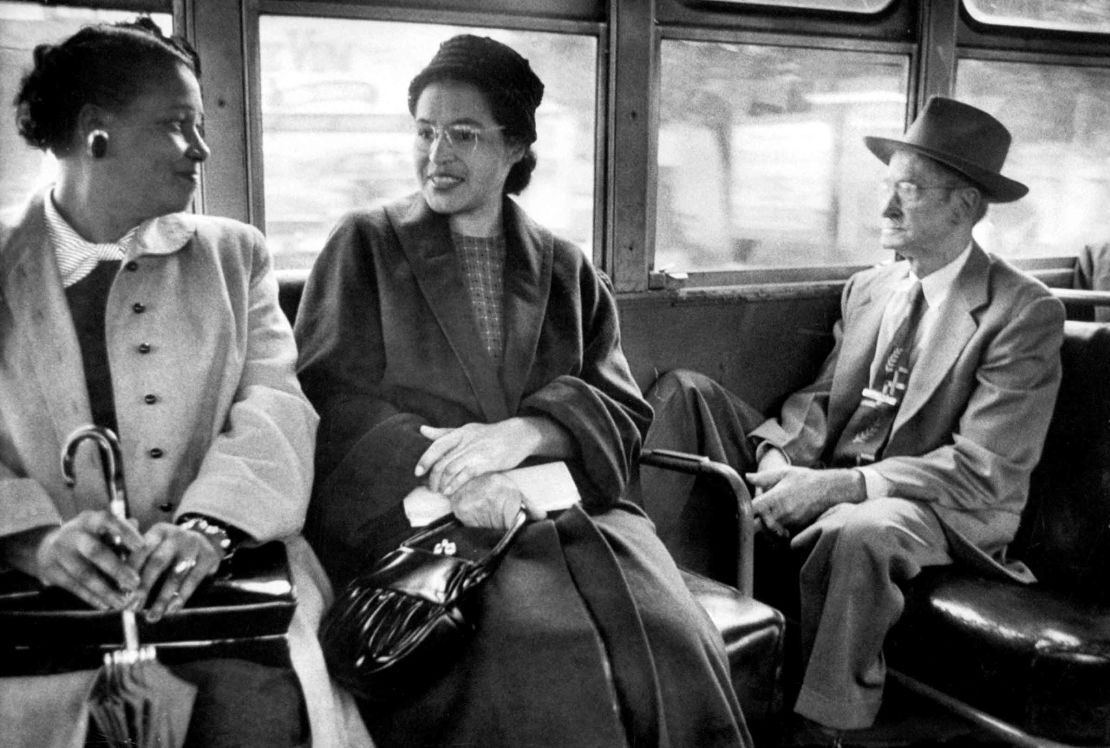
Parks (center) rides on a newly integrated bus following the 1956 Supreme Court ruling that led to the successful end of the 381-day boycott of segregated buses in Montgomery, Alabama.

Parks was born in Tuskegee, Alabama, and “she talks about how her mother really impressed on them the importance of health and being outside and stretching,” Greer said, adding that the civil rights activist had chronic tonsillitis as a child that often waylaid her.

Parks practiced daily stretching and exercise routines, which her mother taught her, according to historian Stephanie Evans.

“Her first exposure to daily exercise actually came from her mother, who was a teacher in Alabama,” said Evans, a professor of Black women’s studiesat Georgia State University, national director of the Association of Black Women Historians and author of the book “Black Women’s Yoga History: Memoirs of Inner Peace,” in an email.

“When the school near their home closed, Rosa and her brother Sylvester still benefited from the diverse lessons their mother offered, and she was their teacher until Rosa was eleven.”

By the time Parks was an adult, yoga had grown in popularity among movie stars and artists. Around this time, a yoga teacher named Indra Devi helped make the practice popular among celebrities, Sarbacker said.

“In the ’50s, she taught Hollywood celebrities, really bringing yoga into the cultural mainstream of the United States. And I think that too helped really popularize yoga,” he said. “We still see echoes of this in terms of the relationship between yoga and celebrity culture.”

By the late 1950s, several stars in Black Hollywood — including singer and actress Eartha Kitt and singer and actor Herb Jeffries — practiced yoga.

Parks was not only taking yoga by this time, but she was also teaching the practice, Evans said.

Parks moved to Detroit in 1957, and her niece Sheila McCauley Keys and nephew Asheber Macharia have recounted in writings how their aunt accompanied them to yoga classes and cultivated her own private practice.

Then in 1964, Parks became a deaconess in the African Methodist Episcopal Church. It was a time when there was a link between the Civil Rights Movement, Black churches and Mahatma Gandhi’s philosophy of satyagraha or “the seizing on to the truth,” Sarbacker said, referring to the concept of resistance that has ties to the yoga philosophy of satya. Gandhi’s approach directly influenced the Rev. Martin Luther King Jr., one of the most prominent leaders of the Civil Rights Movement.

“The efforts of the Civil Rights Movementdidn’t happen by accident,” Sarbacker said. “It was driven by people who cared deeply about the causes that they were invested in and went to lengths to train their bodies and their minds to be up to the task of effecting change in the world.”

‘Mindful and purposeful’

Yoga remained a prominent part of Parks’ life and activism. She died in 2005 in Detroit.

“Parks was mindful and purposeful in her public presentation of peace work. For example, the legacy of yoga continued in the Rosa and Raymond Parks Institute (for Self-Development), which was established in 1987 in Detroit,” Evans said in her email.

“Their signature programs, developed by Mrs. Parks and her longtime friend Elaine Steele, included civil rights history education, advocacy training, and building life skills,” she said. “Exercise is woven into the fabric of the five-week course for youth, and participants are exposed to yoga, as well as karate and other activities.”

There are also many lessons on self-care, communal care and stress management — especially for the Black community — woven into the history of Parks and her yoga practice, Evans said.

Parks’ example of mind-body health not only supports self-care but alsothe importance of community care.

“The stress of people living in America is at an all-time high,” Evans said.

“Systemic solutions must be put in place in addition to a focus on personal healing. It is not enough for an individual to ‘work hard’ to overcome systems of oppression. Changing the system requires a collective effort to address how those systems were built and kept in place,” she said. “Practices like yoga give individuals and communities the focus and energy to work together and make necessary changes.”

While Greer is inspired by how Parks prioritized self-care and personal healing by practicing yoga, she said she worries about how the message of self-care may take away from the importance of having others contribute to a person’s care and well-being.

“I’m always conscious of how self-care absolves others from caring for us,” Greer said.

“I really appreciate this idea that mental wellness and physical health, for Black women in particular, is radical. For us to take charge of that, it’s radical, because others aren’t. We’re neglected in that way by society at large,” Greer said. “Nobody says to men, ‘Are you practicing self-care?’ So, at the same time that we are committing ourselves to it, and learning and making the time to take care of ourselves, we should not stop expecting it as just a right — and it’s something that we should be able to expect from others.”

Correction: An earlier version of this story had the wrong date for the Rosa Parks’ Library of Congress image. It was taken in March 1973.

Iyengar in Ann Arbor: An American Yoga Story – New Documentary Short

To view film click here.

“Today, yoga is practiced practically everywhere in America, with a wide range of approaches, philosophies, studios, and styles. But in the early 1970s, this endeavor, originally from India, was mostly unknown in our country. B.K.S. Iyengar’s visit to Ann Arbor from Pune, India in 1973 changed all that. Sponsored by the Ann Arbor Y and held at the Power Center, the series of public classes were the first the now-famous yoga master taught in North America. People came from across the U.S. for an opportunity to learn from him. The success of his visit sparked a special relationship between Iyengar and Ann Arbor which continued throughout his life.” – Filmmakers Donald Harrison & Jeanne Hodesh

Transcript

  • [00:00:07] SUE SALANIUK: Iyengar yoga cannot be summed up into common sentences.
  • [00:00:12] SALLY RUTZKY: It’s yoga as taught by B.K.S. Iyengar.
  • [00:00:17] CINDY NEAM: It’s more than just an exercise. It’s learning about your body. It’s creating change in your body.
  • [00:00:26] SUE SALANIUK: It’s very precise. There’s a lot of detail.
  • [00:00:33] DAVID UFER: He would never call it Iyengar yoga, he really resisted that. Yoga is yoga.
  • [00:00:39] B.K.S. IYENGAR: Yoga is a union of the body with the mind, mind with the soul.
  • [00:00:53] SALLY RUTZKY: The first thing about him that you noticed was his energy. It’s like he glowed. He was so alive.
  • [00:01:05] DAVID UFER: 1973, of course, were the first public classes, and they were taught in Ann Arbor and then that was really the gateway to having him teach public classes in Chicago and public classes in San Francisco and Boston. It really came through Ann Arbor in 1973.
  • [00:01:21] TONI REESE: I was just a novice. I was only six months along when I first came in contact with Mr. Iyengar in 73. Oh I was just floored. He was so dynamic. I thought that Mr. Iyengar was performing a miracle. It was miraculous.
  • [00:01:44] B.K.S. IYENGAR: Balancing the body on our own shoulders. It’s very interesting to know that the art of yoga is not only meant to keep oneself healthy, but to have to keep the body light. That’s why yogis have given lots of postures to lighten the weight of their bodies.
  • [00:02:10] DAVID UFER: Through a gentleman by the name of Yehudi Menuhin who at the time was one of the, if not, the foremost violin players in the world. He had Iyengar come to Europe and teach classes in Europe before Iyengar ever came to the States. Mr. Menuhin had been to Hill Auditorium in Ann Arbor a number of times, and it was one of the last visits of Yehudi Menuhin in Ann Arbor when Mary Palmer and Bill Palmer, who were significant figures in the University of Michigan Musical Society, encountered Yehudi Menuhin and Mary was very interested in the practice of yoga. Yehudi Menuhin wrote Mary a personal letter of recommendation and that’s what ignited her interest to, at her age, to fly to the other side of the world and begin taking classes with B.K.S. Iyengar.
  • [00:03:13] SALLY RUTZKY: When Mary Palmer first started teaching Iyengar yoga, she taught out of his book, Light on Yoga.
  • [00:03:19] DAVID UFER: That book, if you took the top ten books on yoga in the world, Light on Yoga has outsold the top other ten books. It’s a seminal text on the practice of yoga, asanas and pranayamas.
  • [00:03:36] B.K.S. IYENGAR: These asanas are meant to conquer the known so that the known dissolves in the unknown.
  • [00:03:45] TOM HUNTZICKER: It was almost entirely two of the Ann Arbor Y yoga teachers. That would be Mary Palmer and Priscilla Neel. I believe that they had already been to India studying under Mr. Iyengar and they decided at some point that he should be coming to United States and specifically to Ann Arbor and sponsored by the Ann Arbor Y.
  • [00:04:16] SUE SALANIUK: Yes, they were the grand old dames. They were faculty women in the old sense and very strong personalities and they were a product of their generations.
  • [00:04:31] TOM HUNTZICKER: Mary and Priscilla invited me to Mary’s house. This is the Palmer house, which is a Frank Lloyd Wright house. They proposed this to me, and they wanted the Ann Arbor Y to sponsor his trip to Ann Arbor for a series of classes and a demonstration, and they wanted this to occur at the Power Center on the U of M campus. They were very persuasive, very insistent, but in the nicest way. I actually knew that I was out of my element when I was with them. I knew that this was going to happen and basically they were just waiting for me to say yes to this.
  • [00:05:27] SUE SALANIUK: The Ann Arbor Y was very supportive in sponsoring him to come to the United States, and it just took off from there.
  • [00:05:36] TOM HUNTZICKER: There was a great deal of excitement. This was for yoga practitioners, and particularly for Iyengar yoga practitioners, this was a huge deal. This was a huge deal. He was very forceful, very nice person, great smile, very demanding in his classroom setting. Our classes that week were very successful, and there were people coming from all over the United States to study with him. He put on a great demonstration at the Power Center. We had just enough people attending to make sure that financially it worked.
  • [00:06:19] SUE SALANIUK: Mr. Iyengar, after that first visit to the United States, he had come to the United States before, but it just didn’t click. This was like planting a seed in a fertile ground.
  • [00:06:32] B.K.S. IYENGAR: Because when the body and the mind both are released from the tension, there is ultimate freedom.
  • [00:06:40] DAVID UFER: In 1976, The Ann Arbor Y developed the opportunity for Mr. Iyengar to do a film. It’s an hour long film. It’s called Ultimate Freedom, and it was done in one of the University of Michigan audio studios downtown. We heard years later that he really felt that that was one of the, if not the best film that he put together, and it’s remarkable.
  • [00:07:03] B.K.S. IYENGAR: You all read the title of the film, The Ultimate Freedom. Ultimate freedom means complete freedom in body, in mind, and in the self itself.
  • [00:07:25] DAVID UFER: He had a keen sense in Ann Arbor that people were pretty much living in their front brains and had this all figured out. He took it to us. When I say that to this day, Adho Mukha Svanasana the downward-facing dog, after fifty years of practice, I’m still having a real difficult time getting my heel to the floor. He got my heel to the floor.
  • [00:07:53] SUE SALANIUK: Oh the first few times when he was here in Ann Arbor, nerve racking because the teachers had built up his persona to this very exacting teacher who would be very verbal if you didn’t understand what he was trying to convey or wasn’t coming through.
  • [00:08:19] SALLY RUTZKY: He was not a perfectionist. That’s easy because Iyengar yoga is very much, how is the form? Does it look like the right shape? Is your arm and your elbow extended enough? We can translate that into thinking of it as a perfectionism. But it really isn’t. What he wanted us was to do the best we could. Doing the best you can is doable. It’s just the best you can in that particular minute and then the next one. That’s all it is. Then can you do your best the next minute? But perfectionism is really never doable and self defeating.
  • [00:09:00] CINDY NEAM: My overall impression of him, both from what I observed and then stories I heard from my mom, I think he’s a very or was a very caring person. I think he had a lot of knowledge to impart and I think that it was his way of getting across the point that he was trying to make. I know a lot of people didn’t necessarily take it the right way. I know that people cried, and I think some people weren’t comfortable with that. My impression was always that his intention was very good and that he just wanted to share what he knew as deeply as possible.
  • [00:09:48] SALLY RUTZKY: He just was so full of wanting to convey what he knew to the rest of us. I remember the feeling of walking out of class where I was going to a business lunch and I was so high, I thought I could fly to the moon. I thought, I don’t need fried food, although I still eat it. I don’t need alcohol, that I did give up eventually. I could just do yoga, and I feel better than any of them.
  • [00:10:20] J. P. MCCARTHY: We welcome yoga master B.K.S. Iyengar to Focus. Welcome, sir.
  • [00:10:26] B.K.S. IYENGAR: Thank you very much, sir.
  • [00:10:27] J. P. MCCARTHY: Not everyone understands the difference between yoga and yogi. Be kind enough to enlighten us master.
  • [00:10:36] B.K.S. IYENGAR: Yoga is a science, art, and philosophy of developing the body and mind to the level of the self so that the person is blended very well, both in his head and heart. That is yoga. One who practices that is a yogi.
  • [00:11:00] J. P. MCCARTHY: Is a yogi.
  • [00:11:01] B.K.S. IYENGAR: Yes.
  • [00:11:01] DAVID UFER: How can we really delve into who we are without his credo? The Ann Arbor Y program for years and years, we had the same quote of his on the top of the yoga page, and it had everything to do with “From freedom of the body comes freedom of the mind and then ultimate freedom.”
  • [00:11:21] SUE SALANIUK: Iyengar yoga took off here through serendipity. Yoga was unknown back then. It was just nothing and probably if you mentioned yoga to people, this is that weird hippie stuff. But Ann Arbor has often been a touch point for that sort of activity or that sort of exploration.
  • [00:11:45] TOM HUNTZICKER: Well, I think Ann Arbor was probably a perfect match for this. You had teachers who were here, who were really committed to this method, and there are a lot of people in Ann Arbor then, and now, who are open just by the student population that we had at the Y for our classes, we couldn’t find space, really, for all the classes that we could have taught at that point in time.
  • [00:12:19] CINDY NEAM: The Parker Room, that is the yoga place at the old Ann Arbor Y, brought together a group of people who started experimenting with the knowledge that they were learning. There just seemed to be this group of people that came together and it was like a laboratory of learning. I don’t know. It just felt like something was really going on that was drawing people in.
  • [00:12:45] B.K.S. IYENGAR: Each and every pores of my skin, each and every part of my body, each and every raise of my intelligence has to work penetrating from the extreme end of my foot to the extreme end of the top of my skull. That is known as ultimate freedom, where there is without any obstruction, my intellect can penetrate.
  • [00:13:15] SUE SALANIUK: There has been a Iyengar Yoga Convention in the United States since the early mid 80s. That first one was in San Francisco. They occur every three years to this day. One day, Laurie Blakeney, we were having coffee at a coffee shop downtown and she said, shall we put on the next convention? I said, sure, why not?
  • [00:13:43] DAVID UFER: In 1993, Ann Arbor hosted the Iyengar Yoga National Association of the United States conference of teachers from all over and that was extremely well received.
  • [00:14:00] TONI REESE: People came – from internationally came. The Y wasn’t large enough to accommodate. We used a lot of the university buildings. Different sports venues.
  • [00:14:13] SUE SALANIUK: We had something like 1,500 students 15, 18, something like that. Ann Arbor is small population wise compared to some place like San Francisco, but it’s the atmosphere here in Ann Arbor. It’s the university atmosphere and the fact that Iyengar yoga, this was the sprout where it all started to come from. The international community had that connection to Ann Arbor.
  • [00:14:45] FEMALE_1: You have been in Ann Arbor for how many days now?
  • [00:14:48] B.K.S. IYENGAR: Since four days I’m here.
  • [00:14:50] FEMALE_1: Now, are you conducting classes?
  • [00:14:52] B.K.S. IYENGAR: I’m helping the teachers here so that they can teach a little better than what they were teaching.
  • [00:14:58] FEMALE_1: This is at the Y.
  • [00:14:59] B.K.S. IYENGAR: All over America. What I’m doing, not only in Y, but in all other places.
  • [00:15:04] FEMALE_1: But usually you stay right in India. Now, is it Pune?
  • [00:15:07] B.K.S. IYENGAR: Yes, I stay mostly in India.
  • [00:15:11] FEMALE_1: Disciples, shall we call them. Could come.
  • [00:15:14] B.K.S. IYENGAR: Yes, they come in groups. Every two months, every three months.
  • [00:15:19] TONI REESE: I went to the Iyengar Institute three times over the years and took classes from Mr. Iyengar. We called him Mr. Iyengar. Now, he’s called Guruji and, I guess, the first two times, he was the sole teacher. The last time I went, Geeta his daughter, Geeta Iyengar was the teacher.
  • [00:15:42] SALLY RUTZKY: Mary got us to go to India, and that was another life changing event. It’s not the place I would have wanted to go. If you said, go someplace you want to see the scenery, I would have gone to the Galapagos Islands and looked at tortoises. But instead, I went to India and I learned how to stand on my head.
  • [00:16:05] SUE SALANIUK: Back then, they did intensives in India, where somebody and in this case, Laurie Blakeney, who is our senior teacher in town, had sponsored, had organized this intensive. The Ann Arbor Y teachers had gone to one other one before, and then I was on this one. I think it was three weeks in India and your group was the main group being taught. And I ended up going, I should say, only twelve times. Many of the senior teachers are still going every year.
  • [00:16:38] B.K.S. IYENGAR: This is Yoga Mudrasana here, when the head is bent, the heel compresses the abdominal organs and the compression of the abdominal organs makes the blood to circulate more in those areas. When you come up from that position, that’s how those organs are kept healthy. Garbha Pindasana or the fetus in the womb.
  • [00:17:04] CINDY NEAM: My mom was Laura Roberts, and I believe, took her first Iyengar yoga class in 1976, and she had been searching for a way to help with her back pain. I think from the very first class that she took, she instantly knew that this was a good thing. She really immersed herself in classes and then began teaching classes. She traveled to India three times to study with Mr. Iyengar and as part of doing the yoga, she created a yoga outfit for herself, which became the leg band yoga shorts and became the company Yogaware. Without her really planning it, she created this clothing and prop company. She went from being the housewife who had activities but basically was a housewife and didn’t have something that was really compelling to her to really, I think, within a very short time period, she’s riding her bike. She’s taking all these classes. She’s meeting all these people and, there were yoga potlucks, and yoga camp in the summers, and she had this group of friends that, it always seemed like they were doing something. All of a sudden, she had this whole community. She had a support system in something that was creating health, creating abilities that she didn’t have before.
  • [00:18:46] B.K.S. IYENGAR: How I am synchronizing the movement with the breath.
  • [00:19:07] SUE SALANIUK: The Ann Arbor yoga community has always been a little unique from my observations and experience. We’ve always been very supportive of each other, I think in part because that all started from that single trunk, the Ann Arbor Y, and the teachers being so close and connected, and connected to Mr. Iyengar and Geeta. Then as it became a nice career choice to spread out, we all still supported each other.
  • [00:19:43] CINDY NEAM: One of the wonderful things about Iyengar yoga in Ann Arbor has been the fact that there is a multitude of teachers and studios, and you get all those different perspectives.
  • [00:19:53] DAVID UFER: We were just incredibly fortunate to be in the right place at the right time, to be learning from those first generation of teachers, and that was Mary and Priscilla and Susie and Robert Antoszczyk and Barbara Linderman.
  • [00:20:08] SUE SALANIUK: When I started my studio, I could fill classes very easily. It was a fun idea to be able to start your own studio and be a little bit more in control of what’s happening. Laurie started her studio. Karen and David Ufer started their studio Yoga Focus. Donna Pointer was teaching in various other places. It just began to spread out.
  • [00:20:33] B.K.S. IYENGAR: You can see me when I’m doing that each and every portion of my body is extended in various directions keeping contact with myself.
  • [00:20:50] SUE SALANIUK: He was always very connected to the Ann Arbor Y, very grateful because of their sponsorship.
  • [00:20:56] SALLY RUTZKY: He was very appreciative of Mary Palmer for his whole life. Because she was the one who first brought him here where it did catch on. He had been to other places in the U. S. and given demonstrations, but they didn’t develop students, and he wanted students. I actually think of it as Ann Arbor just had this remarkable group of people who were able to think of Iyengar yoga as a way to live your life.
  • [00:21:31] DAVID UFER: He quite often would refer to Ann Arbor as his home away from home when it came to yoga in America.
  • [00:21:39] B.K.S. IYENGAR: Let this foundation lead you to the highest level of what I say, purity and paternity. Thank you very much.

Ann Arbor District Library Interview

Who: Laurie Blekeney

When: November 6, 2023

Transcript

  • ELIZABETH SMITH: Hi. This is Elizabeth and Amy and in this episode AADL Talks to Laurie Blakeney, founder of the Ann Arbor School of Yoga. Laurie came to Ann Arbor in 1971 to study at the University of Michigan. Intent on running her own business, she was a piano technician and tuner for 25 years and during that period she also studied and taught yoga. Laurie has studied with B.K.S. Iyengar and has brought the Iyengar method to thousands of students over the years. Thank you so much for coming, Laurie.
  • LAURIE BLAKENEY: You’re welcome.
  • ES: We usually like to just ask right off the bat, what brought you to Ann Arbor?
  • LB: I came to Ann Arbor to attend the University of Michigan Residential College in 1971. Having been born in Pontiac, MI, it wasn’t much of a trip to come to Ann Arbor.
  • ES: What did you study at the Residential College?
  • LB: In the 70s, so we studied a lot of stuff at the College. [LAUGHTER]
  • AMY CANTU: I was there in the 80s, so I understand what you mean.
  • ES: You were doing piano tuning then, is that correct?
  • LB: No, what happened was after my first year at the Residential College. I didn’t know what I wanted to major-in ,and all of that. I just stopped going to the College, and I stayed in Ann Arbor. At first, I waited tables for seven years.
  • AC: Oh, where?
  • LB: The Gandy Dancer.
  • AC: Oh, ok. Good tips!
  • LB: It was at the time the biggest fanciest restaurant in town. I eventually decided I wanted to be my own boss. I had already started taking yoga classes. Since I had always played piano as a kid, I thought maybe I could be a piano technician and run my own business, run my own schedule. I enrolled in a piano technology course in Cleveland, Ohio, and then came back when finished.
  • ES: How long did you work as a piano tuner?
  • LB: 25 or 30 years. It was a long time.
  • AC: You were doing it simultaneous with…
  • LB: At first. I was tuning pianos and also working on them. I had a rebuilding shop, so I would collect old pianos, tear them down, refurbish them, and sell them. There was a place on Washington called 16 Hands. I was in there with that collective of craftsmen.
  • AC: Really? Did you have a shop in there then or…?
  • LB: I had a workshop in there.
  • AC: I remember 16 Hands.
  • LB: They had a storefront, but before that, they had a collective of just workspaces that people used.
  • AC: You did that for, you say 25 years. What was it like having your own business at that time in Ann Arbor?
  • LB: There were a lot of pianos. They need tuning once, or twice a year, and there were not that many piano tuners in Ann Arbor at the time. And certainly there were no women. It wasn’t big money, but I had a skill that I could market, and control of my own schedule.
  • AC: Eventually, you were attracted to studying yoga. Can you tell us how you became involved with yoga?
  • LB: When I came back to Ann Arbor, after my freshman year — I probably went home for the summer. I don’t really remember what I did that summer — all my friends were in school still. I had lots of free time during the day because I worked nights. I happened to live a couple blocks from the Ann Arbor Y, and looked over their class offerings. The Y were just starting the Iyengar yoga program in the early 70s. I just took classes two, three times a week during the day.
  • AC: Tell us a little bit about the history of Iyengar yoga in Ann Arbor. Can you talk about B.K.S. Iyengar’s visit and how you became acquainted with it?
  • LB: Well, there was yoga teacher at the Y who was planning to move, or retire,… She decided that two of her students, these mature ladies who were professor wives, should take over the yoga program. And said, “By the way, here’s a new book. It’s called ‘Light on Yoga.’ You should just teach from this book.” They were 15-20 years older than me. I wasn’t too involved in the initial invitation and all of that. As requested the two women started teaching out of ‘Light on Yoga’, and one of them — a very famous lady, Mary Palmer; lived in the Frank Lloyd Wright house. She commissioned Frank Lloyd Wright to do her house.
  • AC: We don’t all get to do that.
  • LB: People don’t all get to do that. So Mary Palmer decided to write the guy who wrote this book she was teaching from, and ask him if she could become his student. He said, “Well, I’m going to be teaching in the UK. If you want to come over and meet me then, you can do that.” She had the resources to do so. This part is hearsay — I was around, but I wasn’t privy. She went and then came back. The report was that he liked her as a student. She had asked him, “Can you come teach our group?” The first couple of times — he came like three or four times before he started going everywhere else — the first couple of times I wasn’t included because I was just the small hippie who was a college dropout. One of the times he taught a bunch of classes at the VFW hall, in the basement of what used to be Seva, and now is Jerusalem Garden. I was part of that group of students. They group started to accept me because I kept coming. It worked out great. Then, Mr. Iyengar became world famous. There were big conventions, and I started going to India in 1983 to study with him.
  • AC: You first met him in, what would you say roughly, what would be the year?
  • LB: Maybe ’72 or ’73.
  • AC: Were you immediately taken with him? What was he like?
  • LB: The reason I was interested in yoga was I had read ‘Siddhartha’ in high school. And read ‘The Autobiography of a Yogi’. And John Lennon did yoga, and so did George Harrison, my favorite. So I thought, OK, I’ll try yoga. Mr. Iyengar was very energetic, very charismatic, pretty proper, formal gentleman, and very articulate in his teaching. Really precise, even though English was his fourth language, not his native tongue at all. But he was really invested in getting people interested in yoga. He was full of fire.
  • ES: When did you begin to teach? What was the transition like from student to teacher for you?
  • LB: There was another woman who was part of that initial group. There were about four of them at the Ann Arbor Y, and this woman’s name was Barbara Linderman*. She taught her own small program in the basement of the Friends Center, on Hill Street. I was her student, but also a student at the Y. I just went wherever I could afford. Later, someone at the Ann Arbor Continuing Ed program wanted a yoga teacher, and they called Barbara. Barbara said, I have a student I think would be good. When she asked me, I said to her, “I can’t do that. I’m not a teacher. I don’t want to do that.” She responded, “Well if you don’t do it, somebody with less talent will.”
  • AC: Ok. That’s motivation.
  • LB: I said, “Will you help me?” She responded, “Whatever you need.” For a long time, I just did taught Continuing Ed classes at Clague Junior High for six, seven years, a couple of nights a week.
  • AC: Did you take to it right away?
  • LB: Well, people kept coming, so…
  • AC: You knew you were doing something right.
  • LB: I believe that it’s a very mechanical, and precise, subject. If you understand the technicalities, and have good communication skills, you would — I don’t know why they kept coming. I don’t know. [LAUGHTER]
  • AC: Just to be clear did you practice a different type of yoga before Iyengar, or was your introduction to yoga right at the same time? I wasn’t entirely clear on that.
  • LB: I never really had much of a practice in another method, but because I didn’t have much money, I did look around for whatever was available. Once I did take some classes — you know where a Big City, Small World bakery is? Is that how it is?
  • AC: Yeah.
  • LB: Or is it a Big World, Small City?
  • AC: It’s Big City, Small World.
  • LB: There was a yoga school there, and it was not Iyengar Yoga. I went once or twice and thought, “No, thank you. I like what they do with at the Y. I’m going to stick with that.” It was pretty immediate. It was luck, just chance.
  • AC: Right place at the right time.
  • ES: Did you feel like there was a cultural movement in Ann Arbor towards yoga, or was it a new thing? Was it everywhere? What was the mindset like at the time?
  • LB: Well, I don’t know that I had a good pulse on the city. I was pretty young, and I was jin my own age group. But I don’t think that it was hugely popular. I think that it was the beginning of Mr. Iyengar coming to the US, and being credited for popularizing yoga. Again, this brilliant woman was Priscilla Neel and her friend Mary Palmer who hooked up with B. K. S. Iyengar because they just wrote him and asked, “Can we become your students?”
  • AC: That’s really something. It’s interesting, too that you’ve mentioned a couple of times you were the hippie girl, and you were in the Residential College. Ann Arbor had that reputation at the time.
  • LB: That was definitely there — it was definitely an alternative… I mean, I came from a factory city. I wasn’t even going to college and still wanted to live here.
  • AC: That says something, but Mary Palmer was not part of that particular culture.
  • LB: No. She was the professor’s wife, a sophisticated lady. There was a lot to that that I probably didn’t know much about.
  • ES: When did you get your own yoga studio?
  • LB: It was a long time comming. The same woman, Barbara Linderman, who recruited me for the Parks and Rec or Continuing Ed program, was about to take a Sabbatical. She had her own program at the Friends Center and said,” Will you cover me while I’m gone?” I responded, “It’s a lot of work and time. She then said, “Yeah, and you get paid per student, instead of per hour.” At the time I was probably making eight dollars an hour or so. She said, “I’m quite sure you could use the pay.” She was quite convincing, and kept pushing me through. So when she returned home, she asked, “What are you going to do now?” I answered, “I don’t know what I’ll do.” She then asked, “Well why don’t you look around for a school, or a church basement, to rent and run your own program?” That was early ’80s, maybe late ’70s.
  • AC: At that time were you still tuning pianos?
  • LB: Primarily.
  • AC: Did you tune all day long?
  • LB: All day long and as many appointments as I could get.
  • AC: Then did you teach mostly at night?
  • LB: Always late, late afternoon and night.
  • AC: Only at night.
  • LB: Then after Barbara returned home and took back her program, I began teaching at the Rudolf Steiner School, on Newport Road and was there for a decade. Tuesday and Thursday nights, and one Saturday a month they rented me their gym.
  • ES: How did your approach to teaching change throughout your time teaching, and how did it evolve?
  • LB: Well, I evolved. As I grew and , it meaning different things to me. Making more sense. I can’t say any big thing happened. However, there was an Indian teacher from California who was also in the group in the UK. His name was Ramanand Patel and he came to Ann Arbor frequently to teach us. We became friends, and he helped push me along,. Then I began traveling to India to study at the Institute, and that’s when things really changed. I have ben traveling there once a year ever since ’83 ’till COVID.
  • ES: Has it resumed at all, since COVID or is it still on pause?
  • LB: No, it resumed last year. It changed. Teaching yoga over Zoom is what COVID brought to us all.
  • AC: How’s it working? How do you like that?
  • LB: Well, I’m really grateful for all the students who are not in town, and still want to take class on Zoom with me. But I prefer having actual bodies in the room with me. It’s easier to see what they’re doing. It’s easier to read what they’re receiving. You can see their eyes, and hear their breath. On Zoom, they’re a inside postage stamp on my laptop.
  • AC: That’d be hard.
  • LB: It’s harder.
  • AC: So I have a question for you. I’m curious about how Iyengar yoga has changed over the years. Is it your perspective that you have continued to refine basic principles or do you feel that it has evolved and you’ve been able to bring your own perspective to it? How do you view that?
  • LB: I think there are hundreds of people around the world,thousands teaching Iyengar Yoga. We have a standardized method. The use of props, and the use of precision, and some other things that are recognizable. But they’re all individual people teaching their students. What is particular to me, is the use of metaphor. I use a lot of imagery. I finally did go back to college, and received a degree in comparative religion. The spiritual aspect of it started to evolve more and more for me, but it started from “Siddhartha”, in high school. Not everybody has quite that same bent. Some people are much more interested in the therapy aspects of it, and some people are much more athletic than I. But we all age and keep growing. It feels to me that Ann Arbor, as a whole, was always interested in the philosophy of yoga. Before Mr. Iyengar wrote any of his books on philosophy, he had taught us here in Ann Arbor, and recommended yoga philosophy books for us to study. We then formed a group in order to study beyond just doing postures. We did that at the Y. Sat in a little conference room at the Y, and we read philosophy books and discussed them with each other. Don’t believe that was there in the beginning at some other communities around the country.
  • AC: You’ve actually helped students become teachers, and you’ve seen a lot of teachers over the course of your career. What would you say is something that you bring specifically to the practice? Do you bring music? Does the piano factor in?
  • LB: I don’t bring a piano into the school [LAUGHTER], but I do think about rhythm and I do think about harmony, and I do think about people trying to have a melodic flow with themselves, and not be too jerky.
  • LB: You have to practice. I’m an amateur classical piano player, and you got to play your scales, and you got to practice your technique before you have much music. There’s a lot of opportunity to draw parallels between the practice of any art form. I consider yoga an art form more than a physical activity.
  • ES: Can you talk a little bit about the different locations where your studio was over the years?
  • LB: I taught in the basement of the Friends Center ,when Barbara was on Sabbatical. Then I taught in the gym of the Rudolf Steiner School for a long time. They then had a change and they wanted their gym back.So I rented a place for another decade or so on Fourth Avenue. Then I rented my place on West Huron. But I also taught other places. I taught at Wayne State University driving over to Detroit 2-3 days a week. I had other classes, as well, at the Gross Pointe War Memorial.and the Senior Citizens home in downtown Detroit. There’s been a bunch of places.
  • AC: How many students do you believe you’ve had over the course of your career?
  • LB: When I was on Fourth Avenue other types of yoga hadn’t quite arrived in Ann Arbor. So I had a lot of students. There were seven Iyengar studios in town then, but people had a lot of students. Then when other styles of yoga became equally popular, the Iyengar studios lost new people. Because people would land somewhere else and like where they landed. I think still now I’m probably seeing 100 people a week. Earlier, it might have been more 150 or 175 people a week.
  • AC: Wow!
  • LB: Most weeks of the year.
  • ES: You’ve had two businesses? How has owning a business in Ann Arbor changed over the years?
  • LB: Well, I miss the Ann Arbor News. That was always a way to connect with the community. I’ve always found advertising to be weird. I’m not much for social media, but that is where advertising has fallen. I tend to rely on word of mouth. I also have a website. If folks Google yoga, they’re going to find me. But it used to be that you could advertise yourself, and people would learn about you that way. I don’t think it’s just Ann Arbor. I believe everybody gets business off their website.
  • AC: You have a couple of other teachers that work with you. Do you have help in the studio with social media, and some other forms of communication?
  • LB: Well, I have a guy who helps me with the website occasionally, but he hasn’t done much for a long time. The school is not on social media at all. Because I don’t want to bother with it.
  • AC: Don’t want to deal with it?
  • LB: The other two teachers I have are both certified. There’s a national certification, or global certification process in Iyengar yoga. The two people who also teach at my school are certified. But I do all the gardening, the cleaning, the accounting, and all the website stuff. It’s all me.
  • AC: Can you talk a little bit about the national conventions?
  • LB: Well, there was one — in ’93, I’m pretty sure — and I was instrumental in it being held in Ann Arbor… We had a really good team of people organize it. Most of the classes were held at the athletic campus, the near one. Where Fingerle’s used to be. Then we did a wonderful performance at the Power Center, called “Warrior in the Moon.” Also a local storyteller tell mythology, a group of Indian dancers – – beautiful girls with their gestures, their dresses, and all. And a group of yogis who were doing choreographic demonstrations. It was really quite a beautiful program. Mr. Iyengar sat in the front row, and he got up on stage afterwards, then said, “You should take it on the road!”
  • LB: So we had a great time hosting him There were probably 1,000 people attending the convention.
  • AC: Wow! This was in the 90s?
  • LB: ’93, I think.
  • ES: Ann Arbor has changed a lot in the past 50 years. Architecture, politics, social changes. Does anything stand out to you?
  • LB: It’s way more chi-chi then when I first moved here. Then, it was the funky place to go, and that’s not true anymore.
  • AC: How do you feel about that? It’s hard to afford to live here for one thing.
  • LB: It’s horrible that people can’t afford to live here. I live near downtown. I rented a house for a long time, and then bought it from my landlords, and paid it off in the early 90s. So I’m really lucky. But that’s sad to me that people who don’t have extreme means can’t really afford to be residents in our city.
  • AC: What are you most proud of?
  • LB: I’m most proud of facilitating people having yoga in their life. It’s a thing that’s important to people. So whenever I get a little tired, or start thinking it’s close to retirement, I see these people really enjoy coming to their yoga school. I’m proud of that. I believe it’s an important thing to have in your life, and I’ve introduced it to a lot of people.
  • AC: You don’t plan to retire anytime soon, do you?
  • LB: I turned 70, this year, so I should think about it. [LAUGHTER] It’s expensive to run my school, the lease is very high, although I have a great landlord who is very responsible. I don’t have any complaints about that. But he’s a businessman, and it’s a prime piece of real estate. Currently, it’s not really a money-maker.
  • AC: It’s for the love of it.
  • LB: I enjoy my job, and I’ve spent a lot of effort creating it. I’ve always wanted to be my own boss. I always have been my own boss. If I continue tol want to work, I want to work there. It’s beautiful. It’s really a lovely yoga school.
  • AC: It’s a really nice studio.
  • LB: It feels as though we’re doing something spiritual in that room. We’re doing something necessary for ourselves. We’re exploring who we are, and there’s a community of people doing it. Now I’m offering all the classes on Zoom, so people can see the recordings. I’m still in the classroom, but people are out in the hallway chatting up each other, enjoying each other’s company, and that’s nice. It’s the fellowship of any spiritual activity. People enjoy it with other people. Although you’re supposed to practice a lot on your own, I wish they did so, and I think many do. But it’s so fun to do it with a teacher, with other people, and recognize you’re not alone in it.
  • ES: Thank you, Laurie.
  • LB: You’re welcome.
  • AC: Thank you very much for coming in.
  • LB: My pleasure. [MUSIC]
  • AC: AADL Talks two is a production of the Ann Arbor District Library.

* Barbara Linderman was my first yoga instructor. Laurie then became my instructor while Barbara was on sabbatical.

Whole-organism Map Looking at the Effects of Training

Understanding how exercise affects the body

At a Glance

  • A study of endurance training in rats found molecular changes throughout the body that could help explain the beneficial effects of exercise on health.
  • Large differences were seen between male and female rats, highlighting the need to include both women and men in exercise studies.

Exercise is one of the most beneficial activities that people can engage in. Regular exercise reduces the risk of heart disease, diabetes, cancer, and other health problems. It can even help people with many mental health conditions feel better.

But exactly how exercise exerts its positive effects hasn’t been well understood. And different people’s bodies can respond very differently to certain types of exercise, such as aerobic exercise or strength training.

Understanding how exercise impacts different organs at the molecular level could help health care providers better personalize exercise recommendations. It might also lead to drug therapies that could stimulate some of the beneficial effects of a workout for people who are physically unable to exercise.

To this end, researchers in the large, NIH-funded Molecular Transducers of Physical Activity Consortium (MoTrPAC) have been studying how endurance exercise and strength training affect both people and animals. The team is examining gene activity, protein alterations, immune cell function, metabolite levels, and numerous other measures of cell and tissue function. The first results, from rat studies of endurance exercise, were published on May 2, 2024, in Nature and several related journals.

Both male and female rats underwent progressive exercise training on a treadmill over an 8-week period. By the end of training, male rats had increased their aerobic capacity by 18%, and females by 16%. Tissue samples were collected from 18 different organs, plus the blood, during the training period and two days after the final bout of exercise. This let the researchers study the longer-term adaptations of the body to exercise.

Changes in gene activity, immune cell function, metabolism, and other cellular processes were seen in all the tissues studied, including those not previously known to be affected by exercise. The types of changes differed from tissue to tissue.

Many of the observed changes hinted at how exercise might protect certain organs against disease. For example, in the small intestines, exercise decreased the activity of certain genes associated with inflammatory bowel disease and reduced signs of inflammation in the gut. In the liver, exercise boosted molecular changes associated with improved tissue health and regeneration.

Some of the effects differed substantially between male and female rats. For example, in male rats, the eight weeks of endurance training reduced the amount of a type of body fat called subcutaneous white adipose tissue (scWAT). The same amount of exercise didn’t reduce the amount of scWAT in female rats. Instead, endurance exercise caused scWAT in female rats to alter its energy usage in ways that are beneficial to health. These and other results highlight the importance of including both women and men in exercise studies.

The researchers also compared gene activity changes in the rat studies with those from human samples taken from previous studies and found substantial overlap. They identified thousands of genes tied to human disease that were affected by endurance exercise. These analyses show how the MoTrPAC results from rats can be used to help guide future research in people.

“This is the first whole-organism map looking at the effects of training in multiple different organs,” says Dr. Steve Carr, a MoTrPAC investigator from the Broad Institute. “The resource produced will be enormously valuable, and has already produced many potentially novel biological insights for further exploration.”

Human trials are expected in the next few years. Information on participating can be found here.

—by Sharon Reynolds

Hero’s Journey

Don’t let tight quadriceps keep you from one of yoga’s most relaxing poses.
By Julie Gudmestad

Supta virāsana (Reclining Hero Pose) is a passive backbend and a wonderful chest opener that’s extremely relaxing and restorative. It’s the perfect antidote to an overstressed life—as long as your knees and lower back aren’t screaming in agony. Why do some students experience such pleasure and others pure pain in this pose?

It’s likely that it has to do with the length in the muscles of your front body. Supta virāsana is a classic front-opening pose. As you sit between your heels, it stretches the fronts of your ankles and lower legs. As you lie back, your quadriceps and abdominal muscles lengthen and open. Extending your arms overhead adds a shoulder and chest stretch. All in all, it’s a wonderful position for spacious, relaxed breathing.

But sometimes your lower body doesn’t cooperate. If you have knee and back pain in this pose, the culprit is often tightness in your quadriceps, specifically the rectus femoris (RF). I recommend working on this muscle if you’re having difficulties in Supta virāsana. One caveat, though: If you have persistent pain in your lower back or knees in the pose, consult your health care provider to rule out structural problems or injuries, then find an experienced teacher for guidance. If you’re uncomfortable doing the pose even with skilled supervision, substitute another supported backbend, like Supta baddha koṇāsana (Reclining Bound Angle Pose) or supported Setubandha sarvāṅgāsana (Bridge Pose).

The RF is one of the four muscles that form the quadriceps on the front of the thigh. It sits directly under the skin, running right down the center of the thigh between hip and knee. This muscle originates on the front pelvis above the hip socket, and then crosses the front of the hip to join the other three quads: the vastus lateralis, v. intermedius, and v. medialis. The three vastus muscles originate on the femur, and all four quadriceps converge into a common tendon, which attaches to the kneecap. This tendon then extends down past the knee, becoming the patellar ligament, which inserts on the shinbone. All four muscles contract to extend (straighten) the knee. Because RF crosses the hip, it also acts to flex (bend) the hip when the thigh and torso are pulled toward each other.

Long and Strong
The joint a muscle is connected to must oppose the lengthening action in order to stretch any muscle. In this case, because the quads extend the knee when they contract, you must flex the knee to lengthen and stretch them. And since RF is connected to two joint muscles, you have to position both joints properly to fully lengthen it. That means you’ll have to simultaneously flex (bend) the knee and extend the hip (bring the thighbone in line with or behind the torso). This position describes Supta virāsana perfectly: When you sit between your heels, your knees are deeply flexed, and when you lay your torso back on the floor, your hips are fully extended.

The trouble usually arises when RF doesn’t lengthen enough to allow the knees and hips their full range of motion. Often the muscle is too short and hasn’t been stretched enough. Perhaps it’s been worked hard or you’ve spent long periods sitting in a chair with hips and knees both at 90-degree angles. And if you’re like most yoga practitioners, you probably spend much more time stretching the backs of your thighs than the fronts. In any case, if all four quadriceps are short and tight, they will prevent the knee from flexing fully, and you will have trouble lowering your hips toward your heels— never mind sitting between them.

Trying to force your pelvis down between your heels before the quads are long enough is counterproductive and painful, and can injure your knees. Instead, sit in Virāsana on a block or other firm prop for a few minutes each day, and all four parts of the quads will gradually stretch out. Over time, you’ll be able to reduce the size of your prop until eventually you’ll be able to sit comfortably on the floor between your heels.

To further protect your knees, make sure your feet and toes point straight back behind you and not out to the sides. Also, while you’re kneeling before you sit, dig the fingertips of each hand deep into the back of the knee, pull and hold the flesh of the calf straight back toward the heel, and then move your fingers out as you sit down. Some people find it helpful to gently pull the calf flesh slightly out toward the little-toe side as they pull it back. This rearranging of the calf seems to open a little more space inside the knee and helps avoid undue twisting of the joint.

A tight RF can also cause problems for the lower back by limiting full extension at the hips. If your RF is tight and short, even sitting down on a block near your heels takes up any slack the muscle has to offer. As you move to lie back, the muscle can’t lengthen any more, and your pelvis will be stuck in a forward tilt. That places your lower back in an exaggerated and uncomfortable arch. Worse still, if one RF is shorter than the other, just one side of the pelvis will tilt forward, causing the pelvis to twist in relation to the spine and knees. This can strain the knees, sacroiliac joints, and lower back.

Body Balance
A good solution is to balance your stretching between the fronts and backs of your legs. If you’re the proud owner of tight, short RF muscles, be sure to stretch them just as frequently as you do your hamstrings. You’ll stretch the RF most effectively if you work on one side at a time, because the muscle is tough (containing lots of gristly connective tissue) and potentially strong. When you try to stretch the left and right together in poses like Supta virāsana, or Bhekāsana (Frog Pose), they will—like two mischievous kids—simply overpower the stretch, causing your back to overarch.

To get an effective RF stretch, you’ll need to flex the knee while you extend the hip in a position you can hold for one to two minutes. Ardha bhekāsana (Half Frog Pose) is a good way to stretch the RFs one at a time. Lie face-down with your shoulders in line with your hips and your knees three to four inches apart, bend your right knee and lift your right foot toward your buttocks. Use your hand or a strap to catch your foot, and before you pull on the foot, press your pubic bone into the floor, eliminating any gap between the front of your hip and the floor. Then, maintaining the three- to four- inch spread between your knees, gradually pull your heel toward the outer edge of your buttock (not the tailbone). Repeat on the other side. Remember, don’t force: Pain in your knee or lower back is never a good thing, and muscle pain can cause the muscle to contract and resist the stretch.

You can also work on your RF muscles at a wall. Start on your hands and knees facing away from the wall, with your feet touching it. Place one shin on the wall, perpendicular to the floor, foot pointing up, and the knee within two to three inches of the wall with plenty of padding beneath it. Now bring the other foot forward to stand flat on the floor a couple of feet from the wall, and you’ll be in a modified lunge.

Next, put your hands on two yoga blocks or a chair seat to support yourself as you gradually move your tailbone down and away from the wall and into a deeper lunge. As the RF stretches and gradually lengthens, gently and slowly lift the hips, chest, and torso back toward the wall. If your lower back starts to hurt, ease off.

As you work over the weeks and months to lengthen the fronts of your thighs, come back to Supta virāsana from time to time to see whether you’re ready to practice it comfortably. You may find that it helps to start with a bolster or stack of folded blankets under your back and head. In the meantime, you’ll have an opportunity to bring yoga philosophy to life: By practicing patience and compassion, you’ll learn to breathe and relax into resistance and to persist in the face of a challenge that can’t be instantly resolved.

Julie Gudmestad is an Iyengar Yoga teacher and physical therapist in Portland, Oregon. She cannot respond to requests for personal health advice. Return to http://www.yogajournal.com/practice/2607/