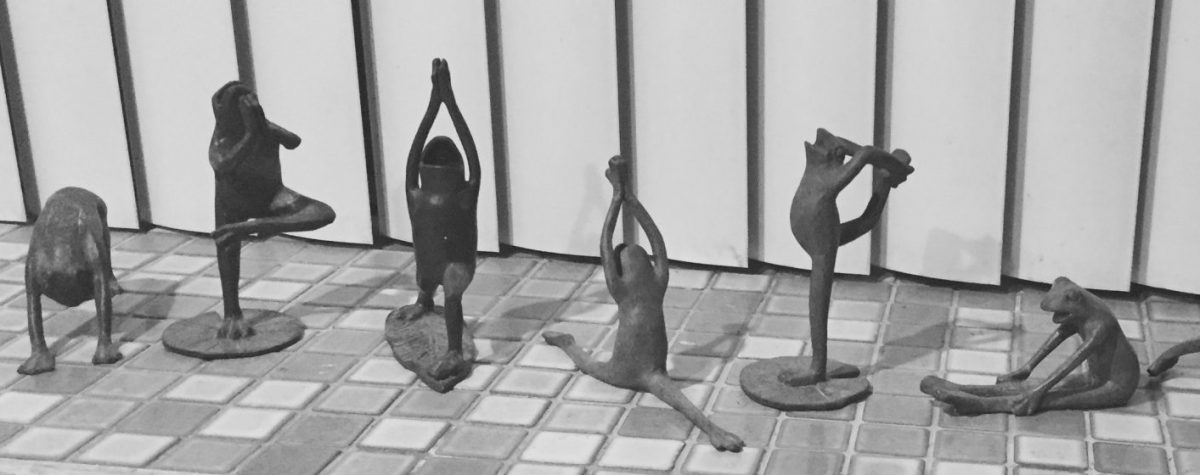
“Is what we do in class physical exercise, or something more?”
Students often arrive thinking yoga is simply about stretching and strengthening. Yet they leave wondering how a ‘physical’ practice could shift their mental state, ease stress, or even change outlook.
This question touches the very heart of what makes the Iyengar Method unique. While other forms of exercise focus primarily on the body, and meditation practices in turn focus on the mind, the Iyengar Method doesn’t separate these interconnected aspects of being.
Why This Question Matters
When people dismiss the Iyengar Method as ‘just physical,’ it reveals a misunderstanding about the embodied practice.
Can you really define where the body ends and the mind begins?
Think about your own experience:
•How posture and breath change after a stressful day, or drive home
•How breathing changes when one feels anxious
•How certain poses can completely shift mood
These aren’t coincidences. They are evidence of the inseparable relationship between body and mind.
How Do the Body and Mind Communicate?
Modern science confirms what yogis have known for centuries: body and mind are in constant conversation.
Mind → Body
•Stress creates physical tension
•Anxiety changes breathing patterns
•Depression affects posture
•Joy literally lifts energy
Body → Mind
•Better posture improves confidence
•Deeper breathing calms anxiety
•Physical strength builds mental resilience
•Balanced poses sharpen focus
This is why a person with illness might suddenly stand tall upon hearing good news, while a strong person may collapse under grief. Body and mind are not separate compartments—they are expressions of the same system.
The Iyengar Method
What makes this Method distinctive is that it works skillfully with both dimensions at once.
Yes, we use props, alignment, and precise actions. But the purpose goes far beyond mechanics—these practices are gateways to awareness and transformation.
When practicing this Method, you’ll notice:
•Precise alignment creates mental clarity, and focus
•Propped postures build confidence, and reduce anxiety
•Challenging aspects of poses develop resilience and self-trust
•Restorative aspects of poses calm the nervous system, and restore balance
This is why this Method of yoga is considered ādhyātmik sastra—a spiritual science. It is not just moving bodies through space. Rather, working with intelligence that animates, and connects, every part.
How to Apply This in Practice?
Three ways to bring body–mind awareness into one’s own practice
Notice the Two-Way Street:
⁃Pay attention to how mood affects poses, and how these shift mood
⁃ This awareness itself is transformative.
Use Physical Actions to Access Mental States:
⁃Feeling scattered? Try standing poses for grounding
⁃Feeling low? Backbends bring energy and lift
⁃Feeling anxious? Forward bends calm and soothe
Approach Each Pose as a Gateway:
⁃It is not, “I’m just stretching hamstrings”
⁃Recognise the physical, energetic, and mental layers—working all at once
💡 Key insight:
Students who understand this integration progress faster, experience fewer injuries, and develop a more sustainable, lifelong practice. They’re not just doing poses—they’re developing a conversation between all aspects of their being.
Beyond Either/Or
So—is the Iyengar Method physical or mental?
The answer is both, neither, and something more. By working with the body, one is simultaneously working with the mind, the breath, the emotions, and even deeper layers of awareness.
That’s why the Iyengar Method is at once:
•Physical – building strength, flexibility, coordination
•Mental – cultivating clarity, focus, balance
•Spiritual – connecting with deeper wisdom, and peace
Ready to Experience the Integration?
Discover how the Iyengar Method works with the whole being—not just the body, not just the mind, but an intelligent connection between both.
•New Students: Level 1 to learn alignment, and prop use
•Experienced Practitioners: Level 2 to deepen one’s practice
• Older Students: Gentle Level to continue the Method
• Injured Students: Iyengar Chair to facilitate healing
Final Reflection
So, is the Iyengar Method physical or mental?
It’s a practice that honors the full spectrum of human experience—physical, mental, emotional, and spiritual—while skillfully weaving them together.
“The body is your temple. Keep it pure and clean for the soul to reside in.”
— B.K.S. Iyengar
The above, with small changes, is part of the Iyengar Yoga Source website in Providence, RI
 Rafael Durán